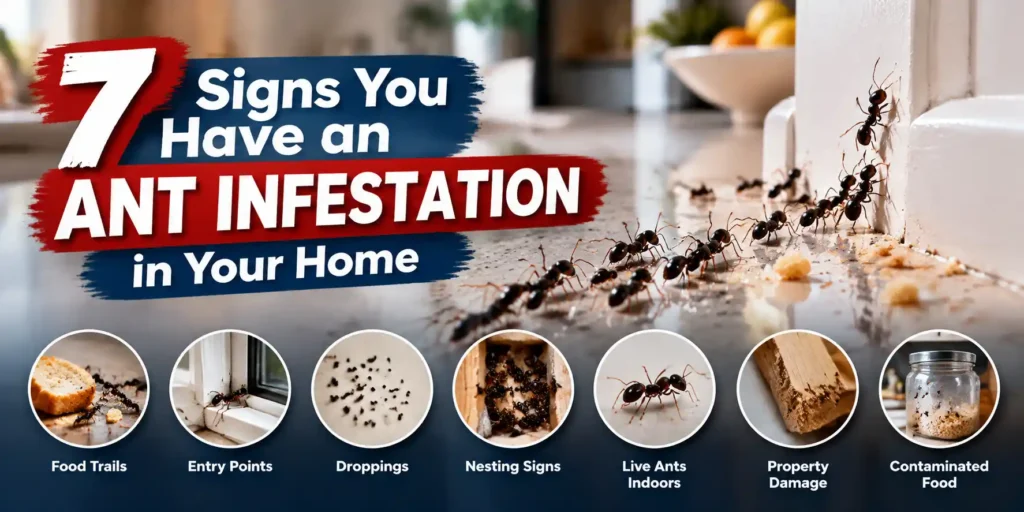
Seeing ants march across your kitchen counter can be frustrating. You clean the area, remove the visible ants, and think the problem is solved. A few hours later, another trail appears.
So, how to get rid of ants in NYC apartments and keep them from returning?
Start by removing food and water sources. Follow the ant trail to find likely entry points. Seal accessible cracks and gaps. Use properly labeled ant baits when appropriate instead of relying only on repeated spraying. If ants keep returning, the colony may be hidden inside a wall, floor, cabinet void, or another part of the building.
This is especially important in New York City apartments. Shared walls, plumbing openings, utility lines, kitchens, bathrooms, and neighboring units can give ants several ways to move through a building.
NYC Health recommends an Integrated Pest Management approach. This means addressing food, water, shelter, leaks, cracks, and holes instead of depending only on pesticides. This guide explains how to remove ants, prevent another infestation, and know when it is time to call a professional.
Why Do I Have Ants in My NYC Apartment?
If you’re asking why I have ants in my NYC apartment, the answer usually comes down to three things: food, moisture, and access.
Ants need very little space to enter a home. Small gaps around pipes, windows, doors, cabinets, baseboards, and floors can provide access.
Once inside, they search for food and water.
Crumbs beneath appliances, sugary spills, open food packages, pet food, garbage, and dirty dishes can attract foraging ants. Moisture also matters. A dripping pipe beneath a sink or water around a bathroom can create favorable conditions.
In an apartment building, the source may not even be inside your unit. Ants can sometimes move through connected spaces while searching for resources.
That is why killing only the ants you see may not solve the underlying problem.
What Are the Signs of an NYC Ant Infestation?
A few ants do not automatically mean that a large colony is living inside your apartment. However, repeated activity deserves attention.
You may have an NYC ant infestation if you regularly find trails along counters or baseboards, ants appearing from the same crack, activity around sinks, or ants returning soon after cleaning.
Pay attention to where they are traveling.
Instead of immediately wiping away every ant, briefly observe the trail. It may help you identify where the ants are entering or what is attracting them.
Repeated activity in several rooms can indicate a larger problem that needs closer inspection.
What Types of Ants Are Found in NYC Apartments?
Identifying the ant matters because different species have different habits.
Pavement Ants
Pavement ants NYC residents encounter can enter buildings through cracks and gaps. They may forage indoors for food and are often noticed around kitchens, floors, foundations, or other structural openings.
They are small, which can make their entry points difficult to notice.
Carpenter Ants
Carpenter ants deserve more attention because their behavior differs from many small household ants.
They excavate wood to create nesting galleries. They do not eat wood like termites do.
Moisture-damaged wood can be especially important when investigating carpenter ant activity. If larger ants repeatedly appear indoors, especially around damp or damaged wood, a professional inspection may be worthwhile.
Carpenter ant control NYC should focus on finding the source of the activity rather than simply killing individual workers.
Small Household Ants
Very small ants can be difficult for homeowners to identify accurately.
If you are searching for how to get rid of tiny black ants in apartment spaces, avoid assuming the species based only on size or color. Observe where they appear, what attracts them, and where their trail leads.
Correct identification can help determine the most suitable control method.
How to Get Rid of Ants in NYC Apartments Step by Step
Effective ant control starts with changing the conditions that allow ants to survive.
NYC Health advises residents to remove access to food, water, shelter, and routes pests use to move around a home. Residents should also report leaks, cracks, holes, and pest problems to building management.
Step 1: Follow the Ant Trail
Do not focus only on the ants walking across your counter.
Look at where they are coming from and where they are going.
Check along baseboards, underneath sinks, behind appliances, around plumbing penetrations, near windows, around doors, and inside cabinets.
You may not find the nest itself. The goal is to identify active pathways and possible entry areas.
Step 2: Remove Food Sources
Ants can survive on small amounts of accessible food.
Clean counters after preparing meals. Wipe up sugary spills. Do not leave dirty dishes overnight. Keep cereal, sugar, snacks, flour, and other foods in closed containers.
Move appliances when practical and clean underneath them.
Pet food should not remain accessible longer than necessary.
NYC Health similarly recommends keeping food sealed, removing garbage regularly, and keeping kitchens clean and dry.
Step 3: Remove Water and Moisture
Food is not the only attraction.
Check beneath the kitchen and bathroom sinks for leaks. Look for moisture around pipes and fixtures. Dry wet surfaces and report plumbing problems that you cannot repair yourself.
Reducing moisture can make your apartment less attractive to ants and other pests.
Step 4: Use Ant Baits Carefully
Ant bait can be useful because foraging ants may carry bait back toward the colony.
NYC Health’s guidance specifically includes bait stations and gels among methods that can be used for ants and cockroaches. Any pesticide product should be used only according to its label.Place a properly labeled product only where its instructions permit.
Keep pesticide products away from children and pets as directed by the label.
Avoid randomly combining different pesticide products.
Step 5: Seal Entry Points
Once you identify likely access points, suitable gaps and cracks should be addressed.
Inspect areas around baseboards, pipes, cabinets, windows, floors, and other openings.
NYC’s IPM guidance emphasizes repairing and sealing holes, gaps, and cracks as part of long-term pest management. In rental properties, building-related repairs should be reported to management.
Step 6: Monitor the Apartment
Do not assume the problem is solved because ants disappear for one day.
Continue checking the areas where activity occurred.
If ants return repeatedly, appear in several rooms, or keep emerging from structural areas, you may be dealing with a colony or source that cannot be addressed from the apartment surface alone.
How to Get Rid of Ants in Kitchen NYC Apartments
Kitchens offer nearly everything ants need.
There is food, water, warmth, garbage, plumbing, cabinets, and many small hiding areas. That is why how to get rid of ants in kitchen NYC is such a common concern.
Start with the places that are easiest to overlook.
Check beneath the refrigerator and stove. Clean around the toaster, microwave, pantry shelves, garbage area, and pet bowls. Inspect underneath the sink for moisture and plumbing gaps.
Do not leave fruit, sweets, or open packages exposed.
Clean visible trails and remove the food source attracting the ants. If you use bait, follow its label carefully and avoid placing food nearby that competes with it.
A clean kitchen alone may not eliminate an established colony, but it removes one of the main reasons ants continue foraging inside your apartment.
Should You Spray Ant Trails?
Repeated spraying is not always the best way to get rid of ants in NYC.
A spray may kill the workers you can see without addressing the source of the infestation.
NYC Health specifically states that spraying chemical pesticides alone does not address the root of pest problems. The city recommends combining any necessary pesticide use with sanitation, pest proofing, and building maintenance. Never use pesticide foggers or bombs in your apartment. NYC Health advises residents not to use them and warns against illegal or unlabeled pesticides. If you choose a consumer pesticide, read and follow the manufacturer’s label exactly.
Why Do Ants Keep Coming Back After Cleaning?
Cleaning is important, but it does not close an entry point or necessarily eliminate a colony.
You might clean every visible ant from the counter while ants continue entering through a small opening behind a cabinet.
Another possibility is moisture. A hidden leak can continue attracting pests even when food is properly stored.
In apartment buildings, ants may also be moving through areas outside your individual unit.
That is why effective ant control NYC should focus on the cause of the activity, not just the insects you can see.
How to Get Rid of Carpenter Ants in NYC
If you need to know how to get rid of carpenter ants in NYC, start by determining where the activity is coming from.
Look for repeated sightings of larger ants and pay particular attention to damp or damaged wood.
Do not start opening walls or applying pesticides into unknown structural spaces yourself.
Carpenter ant activity may require a more detailed inspection to identify nesting areas, moisture problems, and access points.
Professional identification is useful when you cannot tell whether you are seeing carpenter ants or another species.
DIY Ant Control vs Professional Treatment
DIY control can be reasonable for a small, newly discovered problem.
Cleaning, removing food, correcting moisture, sealing appropriate gaps, and carefully using labeled ant bait may resolve limited activity.
The situation changes when ants continue returning.
Professional pest control for ants NYC apartments need can involve identifying the ant, tracing activity, inspecting likely nesting areas, applying targeted treatments when appropriate, and recommending exclusion or sanitation changes.
The objective should not simply be to kill as many visible ants as possible.
It should be to determine why they are present and reduce the conditions that allow the problem to continue.
When Should You Call an Ant Exterminator?
Consider professional help when ant activity continues despite reasonable sanitation and prevention measures.
Recurring trails are one warning sign. Activity across several rooms is another.
You should also consider an inspection if you suspect carpenter ants, cannot locate the source, find ants coming from inaccessible wall areas, or continue seeing activity after trying appropriate bait and prevention measures.
A professional can determine whether the issue is localized to your apartment or may involve a larger part of the property.
For broader pest problems, our pest control NYC services can help identify and address common pests found in homes and apartments.
For a dedicated ant treatment option, explore our Ant Control Services NYC page.
What Should NYC Renters Do About Ants?
Renters should not ignore persistent pest problems.
Report recurring ant activity and building conditions such as leaks, cracks, and holes to your landlord, superintendent, or property manager.
NYC Health says building owners are required to keep apartments and common areas free from pests and that pest control should address underlying conditions rather than rely only on spraying. NYC also instructs tenants to report pest-attracting conditions to their building owner. If the problem is not corrected, residents can contact 311. The specific requirements can depend on the property and circumstances, so tenants should document recurring activity and maintenance problems.
How to Prevent Ants From Coming Back
Long-term prevention is simpler when you think like an ant.
Ask what the ants are finding inside your apartment.
Is food accessible? Is there moisture under the sink? Is garbage sitting overnight? Is there a gap around a pipe? Are crumbs accumulating beneath an appliance?
Addressing these conditions makes your home less attractive.
NYC’s IPM approach follows the same principle. Effective pest management targets food, water, shelter, entry points, and building conditions instead of depending on routine pesticide sprayingContinue monitoring previously active areas even after the ants disappear.
Frequently Asked Questions
How to get rid of ants in NYC apartment homes?
Remove accessible food and water, follow trails to possible entry areas, seal appropriate gaps, and use properly labeled ant bait when suitable. If ants continue returning, professional inspection may be needed to identify the colony or building-related source.
Why do ants keep coming back to my apartment?
The colony may still be active, food or water may remain accessible, or ants may have an entry route that has not been addressed. In multifamily buildings, the source can also extend beyond one apartment.
Can I use ant bait in an NYC apartment?
Properly labeled consumer ant baits can be used according to their label instructions. NYC Health includes bait stations and gels among pest-management options for ants and cockroaches. Keep pesticides away from children and pets as directed.
How to get rid of ants in apartment NYC kitchens?
Clean food residue, store food securely, manage garbage, check for plumbing leaks, inspect likely entry points, and use an appropriate labeled bait if needed. Persistent kitchen activity may require inspection.
Can ants come from another apartment?
They can move through connected building areas and structural openings. If ants keep returning despite controlling conditions inside your unit, report the issue to building management so the wider source can be investigated.
When should I call professional ant control in NYC?
Consider professional service when ants appear daily, spread to several areas, return after reasonable DIY measures, emerge from inaccessible structural spaces, or may be carpenter ants.
Need Help Getting Rid of Ants in Your NYC Apartment?
Knowing how to get rid of ants in NYC apartments starts with finding out why they are entering in the first place.
Cleaning and prevention can help with minor activity. A recurring infestation may need a more detailed inspection and targeted treatment.
Best@Pest Exterminating provides ant and pest control services for NYC homes, apartments, and other properties. Our goal is to identify the source of the problem and recommend treatment based on the conditions found at your property.
If ants keep returning, contact Best@Pest Exterminating at +1 718-284-7378 to discuss your ant problem and schedule service.