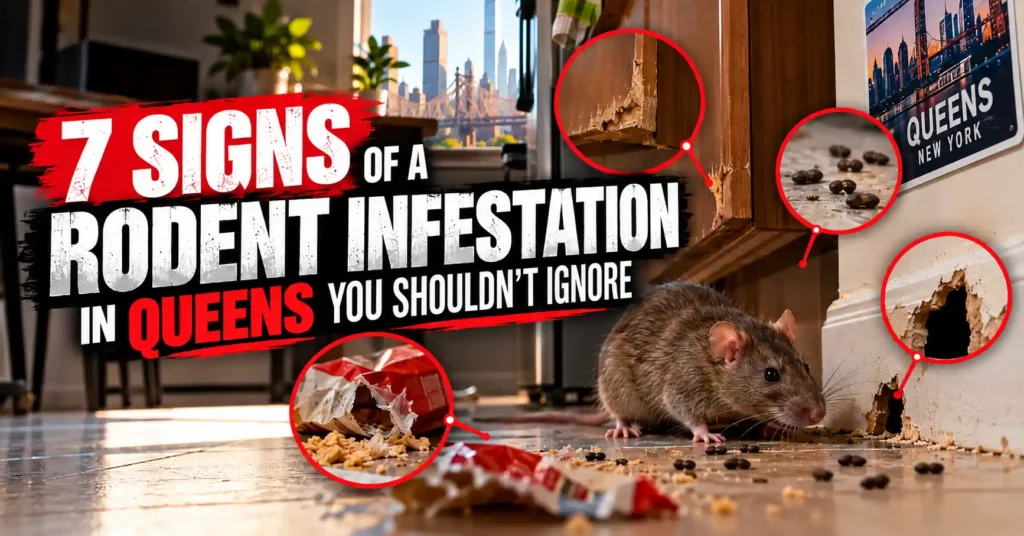
Rodents can enter a home or business quietly and stay hidden for days or even weeks. By the time you see a mouse or rat in the open, there may already be more activity behind walls, under floors, inside storage areas, or near food sources. For property owners in Queens, knowing the early warning signs can help prevent a small problem from becoming a larger infestation.
The most common signs of rodents in the house include droppings, damaged food packages, gnawing, hidden nests, strange sounds, bad odors, and repeated nighttime activity. Some signs are easy to notice, while others can be missed unless you know where to look.
This guide explains the 7 signs of a rodent infestation in Queens, what they may mean, where to check, and when professional help may be the safer and more effective choice. Whether you manage a single-family home, apartment, restaurant, office, retail store, warehouse, or another commercial property, early action can help protect the building, food, belongings, and daily operations.
If you are dealing with more than one pest issue, our Pest control nyc resources can also help you understand common pest problems found across New York City.
Why Rodent Problems Can Grow Quickly in Queens Properties
Queens has a wide mix of homes, apartment buildings, restaurants, offices, shops, warehouses, and older structures. Rodents can use very small openings around utility lines, doors, foundations, roofs, vents, and shared building spaces to reach indoor areas. Once inside, they search for three basic things: food, water, and shelter.
A rodent infestation Queens NY property owners face may start with only a few animals. However, rodents are good at staying out of sight. They often move along walls, behind appliances, inside ceilings, under cabinets, and through wall voids. This is why early clues matter.
Homes may attract rodents through open food, pet bowls, clutter, trash, gaps around pipes, or basement openings. Commercial buildings may have extra risks because of loading areas, food storage, large trash volumes, shared walls, and frequent deliveries.
If you want a wider look at citywide rodent problems, our Rodents in NYC Buildings guide explains how rodents can move through shared structures and common building areas.
1. You Find Droppings in Kitchens, Cabinets, Basements, or Storage Areas
One of the clearest warning signs is rodent droppings. These may appear near food, under sinks, behind appliances, inside cabinets, along walls, in basements, or around storage boxes.
Fresh droppings may suggest recent activity. Older droppings can still show that rodents have used the area before. The location is often more useful than the amount. For example, droppings found behind a refrigerator or under a sink may point to a regular travel route between food and shelter.
In homes, check pantry shelves, kitchen drawers, laundry rooms, garages, basements, and utility closets. In commercial properties, inspect food storage areas, break rooms, stock rooms, loading zones, and spaces behind equipment.
Do not sweep or vacuum droppings without proper precautions. Disturbing contaminated material can spread particles into the air. If there are many droppings, repeated fresh droppings, or signs in several rooms, the problem may be larger than it first appears.
For homeowners and property managers who are comparing citywide options, Rodent Control NYC can help explain the role of inspection, removal, and prevention as part of a complete plan.
2. You Notice Chewed Packaging, Wood, Plastic, or Wires
Rodents need to gnaw because their teeth continue to grow. That behavior can leave visible rodent gnaw marks on food containers, cardboard, wood, plastic, insulation, and other materials.
Chewed cereal boxes or pet food bags are common clues in kitchens and storage spaces. In utility areas, you may also find damage around pipes, cables, or soft construction materials. New damage may look lighter in color than older marks.
Gnawing should not be treated as only a cosmetic issue. When rodents damage electrical wiring, the repair may become more serious and more expensive. In a business, chewed packaging can also lead to product loss, sanitation concerns, and customer complaints.
Look closely at areas where rodents can stay hidden. These include the back of cabinets, appliance spaces, basement shelves, wall edges, attic storage, and the corners of stock rooms.
If you are unsure whether the damage came from rats or mice, Rat vs. Mouse: How to Tell the Difference can help you compare their size, droppings, tracks, and other clues.
3. You Hear Movement, Scratching, or Squeaking After Dark
Scratching sounds in walls may come from mice or rats moving inside wall voids, ceilings, attics, or floor spaces.
Rodents are usually more active when the property is quiet. You may hear light scratching, running, chewing, or small thumping sounds at night. The noise can seem to move from one part of the room to another because wall spaces and pipe routes can connect different areas.
Repeated signs of mice in walls should not be ignored, especially when the sounds happen in the same place each night. The activity may be close to a food source, nesting area, or entry point.
If you hear repeated activity but cannot see the rodents, a detailed inspection can help locate possible entry points and movement routes that are easy for property owners to miss.
4. You Find Shredded Paper, Fabric, Insulation, or Other Nesting Material
Rodents often build nests in dark, quiet, protected areas. Common rodent nesting signs include shredded paper, torn fabric, insulation, cardboard, dried plant material, or soft packing material collected in one location.
A nest does not always look neat. Sometimes the only clue is a pile of shredded material in a hidden corner. You may also notice nearby droppings or a strong smell.
Reducing clutter can help, but removing nesting material alone will not solve the problem if rodents still have access to food and entry points.
For prevention ideas after treatment, Rodent Proofing Tips for NYC Apartments explains practical ways to reduce access around doors, pipes, utility openings, and other common gaps.
5. You See Rodents or Notice More Activity at Night
Mice and rats are often most active when people are asleep or when a business is closed. Frequent rodent activity at night may include movement along walls, sudden noises near trash areas, quick sightings in kitchens, or motion near stored food.
Seeing one rodent does not always tell you how many are present. Rodents are skilled at hiding, so one visible animal may be only part of the problem. Daytime sightings can sometimes mean the rodent was disturbed, searching for food, or living in an area with a larger population.
A mice infestation in Queens home may show up as fast movement near cabinets, small gaps, or appliance areas. A rat infestation in Queens property may be easier to notice in basements, yards, trash areas, alleys, storage rooms, or places with larger entry points.
For more background on urban rodent behavior, Why Rats Thrive in NYC explains why dense neighborhoods, food access, hiding places, and building connections can support rodent activity.
6. You Notice Greasy Rub Marks, Tracks, Strong Odors, or Pet Reactions
Rodents often use the same routes again and again. Over time, their bodies can leave dark rub marks along walls, baseboards, pipes, and small openings. Dusty areas may also show small footprints or tail marks.
A stale, musky, or unusual smell can point to hidden activity, especially in closed spaces. A strong odor that appears suddenly may come from urine, nesting material, or a dead rodent inside a wall or other hard-to-reach place.
Pets can also notice rodents before people do. A dog or cat may stare at one wall, scratch near a cabinet, become alert at night, or repeatedly sniff the same area.
7. Food Packages Are Damaged and Contamination Keeps Returning
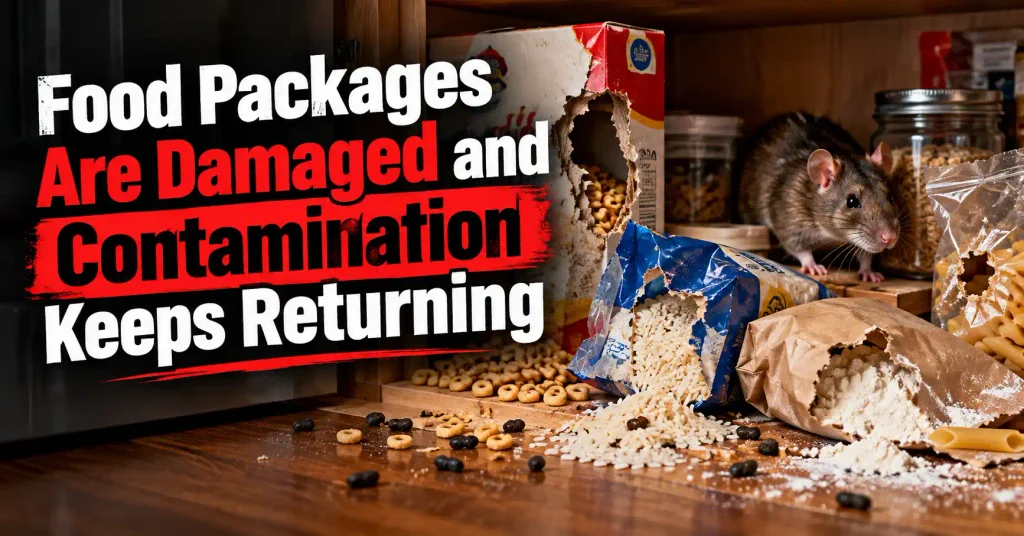
Another common warning sign is repeated damage around food. Rodents may chew through paper, cardboard, thin plastic, and some containers to reach cereal, rice, pet food, snacks, seeds, or other stored items.
You may clean the area and still find new droppings, torn packages, crumbs, or tracks the next day. That repeated pattern is important. It suggests the source has not been removed.
In a home, this may affect a pantry, kitchen cabinet, pet feeding area, or basement storage room. In a restaurant, grocery store, office kitchen, or food-related business, the risk can be more serious because sanitation and product protection are part of daily operations.
Do not simply move damaged food to another shelf. Throw away contaminated items, clean the area safely, place food in sealed containers, and look for entry points nearby.
If rodents are reaching multiple food areas, a professional inspection may help identify hidden routes that are not obvious from inside the room.
How to Know Whether You Have Mice or Rats
Many people ask how to know if you have rodents when they have not seen the animal directly. The best approach is to compare several signs together instead of relying on one clue.
Common signs of mice infestation may include smaller droppings, light scratching sounds, small gnaw marks, and activity in cabinets, walls, or appliance spaces. Common signs of rat infestation may include larger droppings, stronger gnawing, heavier movement sounds, burrows, and larger travel routes.
The exact species matters because entry points, trap placement, movement patterns, and control methods can be different. For a broader species overview, see What Types of Rodents Call New York Home? A proper inspection can then help confirm what type of rodent is present and where it is active.
- Why Rodent Problems Should Be Handled Early in Queens Homes and Businesses
Rodent problems rarely improve on their own. If food, water, shelter, and access are still available, the activity can continue and spread to other parts of the building.
In residential properties, rodents can contaminate food, damage stored items, chew materials, and create stress for families. In commercial properties, the problem may also affect inventory, staff areas, customer spaces, and the reputation of the business.
If you are reviewing treatment budgets, Does Rodent Control Cost in NYC can help you understand why pricing may vary based on property size, infestation level, access points, treatment needs, and follow-up work.
What to Do When You Find Rodent Signs
The first step is to avoid ignoring the evidence. Take note of where you found droppings, damage, nesting material, sounds, odors, or sightings. These details can help show patterns.
Next, remove easy food sources. Store pantry items and pet food in sealed containers. Clean crumbs and spills. Keep trash covered and remove it regularly. Do not leave pet bowls full overnight if rodent activity is suspected.
Check for visible openings around doors, pipes, utility lines, vents, foundations, roof edges, and basement windows. Mice can use very small gaps, so openings that look minor may still matter.
However, avoid sealing every hole immediately if active rodents may already be inside. Blocking the wrong opening can trap rodents in wall spaces or push them toward another part of the property. Inspection should come before major exclusion work.
For a deeper prevention guide, Unleash the Power of Xcluder Rodent Barriers explains how physical barriers can be used as part of a broader rodent-proofing plan.
When DIY Rodent Control May Not Be Enough
A key question is when to call a rodent exterminator. Professional help should be considered when you see repeated fresh droppings, hear activity in walls, find several entry points, notice signs in multiple rooms, see rats, or continue to find evidence after cleaning and trapping.
Professional service can also help identify why rodents are entering. Treatment without exclusion may reduce activity for a short time but allow new rodents to enter later.
For rat-specific service options, Rat Control Service in NYC can help you understand how inspection, control, and prevention may work together.
What Professional Rodent Control Should Include
Effective rodent control is more than placing traps. A complete approach starts with inspection. The goal is to identify the rodent type, active areas, food sources, nesting zones, travel routes, and likely entry points.
The next step may include targeted trapping or other control methods based on the property and level of activity. Treatment should focus on places where rodents are actually moving, not just open areas where people happen to see them.
Exclusion is also important. Gaps around doors, pipes, vents, roof lines, foundations, and utility openings may need to be sealed with materials suited to the location.
Sanitation recommendations can reduce food and shelter. Follow-up helps confirm whether activity is decreasing and whether new signs are appearing.
For burrowing activity around outdoor areas, Rodent Control Eliminates Burrowing Rodents provides more information about controlling rodents that may be nesting in soil or close to structures.
If you need professional rodent removal Queens property owners can rely on, choose a company that looks at the full cause of the problem instead of treating only the visible symptoms.
How Queens Homeowners Can Lower the Risk of Future Rodent Problems
Prevention works best when it combines food control, cleaning, maintenance, storage, and building repairs.
Keep dry food, bird seed, and pet food in sealed containers. Wipe up crumbs and spills, especially under appliances and inside cabinets. Keep trash in containers with secure lids.
Reduce clutter in basements, garages, closets, stock rooms, and storage areas. Cardboard boxes and loose paper can provide nesting material and hiding places.
Inspect the outside of the property several times a year. Look for gaps around pipes, vents, doors, utility lines, siding, foundations, and roof edges. Weather and building movement can create new openings over time.
Trim vegetation that touches the building, clean up outdoor food waste, and avoid leaving bags of trash beside the property for long periods.
Homeowners in nearby boroughs may also find useful ideas in How to Prevent Rats & Mice in Your Brooklyn Home. Many prevention steps apply to Queens properties as well.
Why Rodent Control Matters for Queens Businesses
Rodent activity can create serious problems for restaurants, offices, retail stores, warehouses, property managers, and other businesses. Even a small amount of visible evidence can worry employees and customers.
Commercial rodent control should be organized around the way the property operates. Delivery doors, trash areas, loading zones, food storage, floor drains, utility rooms, and shared walls may all need attention.
A business may also benefit from regular monitoring so new activity can be found before it becomes obvious to customers or staff.
The goal should be long-term control, not only a quick reaction after a sighting.
Rodent Control for Apartments and Multi-Unit Buildings in Queens
Apartment buildings can be challenging because rodents may move between units through wall openings, pipe gaps, basements, trash rooms, hallways, and utility spaces.
A tenant may see activity in one apartment even when the main source is somewhere else in the building. Treating only one unit may not solve the larger issue if shared access points remain open.
Property managers should look at common areas, basement utility lines, trash handling, storage rooms, exterior openings, and reports from several units. A coordinated approach can be more effective than treating complaints one by one.
Residents can help by storing food correctly, keeping kitchens clean, reporting leaks, and telling management about new holes or activity early.
Best@Pest Exterminating Rodent Services in Queens and Nearby Areas
Best@Pest Exterminating helps residential and commercial customers address rodent problems with inspection, targeted control, and practical prevention steps.
Our service area includes the Bronx, Brooklyn, Long Island, Manhattan, New Jersey, Queens, and Staten Island. Property types can vary widely across these areas, so rodent treatment should be based on the actual structure, signs, and access points found during inspection.
For local homeowners, landlords, property managers, restaurants, offices, and other businesses, the goal is to identify the source of the activity and build a plan that helps reduce current rodents while lowering the chance of future entry.
If your main concern is a Queens property, Pest Control Services in Queens can help you review local service options for rodents and other common pests.
Frequently Asked Questions About Rodent Infestations in Queens
Can one mouse mean there are more nearby?
Yes, it is possible. Mice often stay hidden, and one visible mouse does not show the full size of the problem. Check for droppings, sounds, gnawing, nesting material, and repeated activity before assuming it is a single animal.
What is the first sign of a rodent infestation?
Droppings, scratching at night, damaged food packages, and small gnaw marks are often among the first signs people notice. The first clue can vary depending on where the rodents are nesting.
Where should I check for rodents in my Queens home?
Start with kitchens, basements, garages, utility areas, behind appliances, under sinks, inside cabinets, attics, and storage rooms. Look along walls and near food or water sources.
Can rodents live inside walls without coming into the room?
Yes. Rodents may travel through wall voids, ceilings, pipe openings, and utility spaces for some time before being seen in an open room. Repeated sounds or odors can be important clues.
How long does rodent control take?
The timeline depends on the type of rodent, infestation size, property layout, number of entry points, and whether exclusion work is needed. Some cases improve quickly, while larger or multi-unit properties may need monitoring and follow-up.
Should entry holes be sealed before or after rodent removal?
The timing depends on the situation. Sealing every opening too early may trap rodents inside or redirect them to another area. A professional inspection can help determine which openings should be closed and when.
Need Rodent Control in Queens? Call Best@Pest Exterminating
Rodent warning signs are easier to manage when they are found early. Droppings, gnawing, scratching, nesting material, nighttime movement, odors, and repeated food damage can all point to a problem that deserves attention.
If the signs keep returning, the activity is inside walls, or you are dealing with rats, a professional inspection can help identify the source and build a more complete control plan.
Best@Pest Exterminating serves homeowners, landlords, property managers, and businesses across Queens and other NYC-area locations. If you are seeing rodent activity on your property, call Best@Pest Exterminating to schedule an inspection and discuss the right next step for your home or business.