Marquee Text
Limited-Time Discount: Save $50 on Your First Service as a New Customer!

Bees and Wasps

Beekeepers in protective gear safely removing a beehive during professional bee and wasp removal service in New York City
Bees and Wasps

Bees & Wasps in NYC: Safe Removal vs DIY Dangers

1. Introduction   Every spring and summer, New Yorkers report the buzzing of intruders hovering about their houses, parks, balconies, and even within their walls.   You may think your first reaction is to disable wasps or bees with homemade remedies, but not so fast. DIY bee and wasp removal can lead to painful stings and legal repercussions, particularly with protected honeybees. The best approach is to make the right decision depending on the situation at hand.   In this guide, we will address the most common questions New Yorkers have concerning wasps and bees, and answer them with professionally verified facts, from identification, risks, NYC legal issues, and why professional bee removal services are the safest option.   2. Common Bee & Wasp Species in NYC   New York City is home to numerous species of both bees and wasps. While some help improve our environment, some pose significant threats. Understanding the differences is crucial when determining how to manage an infestation. Honey Bees:                   Honey bees are small, fuzzy, gold and brown with black stripes. They’re naturally gentle and only sting when provoked. They are protected pollinators that play a crucial role in agriculture and the ecosystem. Honey bee removal in NYC often requires relocation rather than extermination, and is performed by specialized beekeepers.   If you spot bees clustering around a tree or fence, you may be witnessing a swarm, a natural phenomenon known as a relocation event. This process is not overly dangerous; however, it requires the expertise of safe bee relocation professionals in NYC to handle the colony’s movement in a humane manner.   Bumblebees:               These chunky fuzzy critters are often misidentified as aggressive wasps due to their size. Fortunately, they are gentle giants. Bumblebees rarely sting and are beneficial pollinators. Unlike hives, they most often rest on the ground or in old rodent burrows.   Yellowjackets:                   Yellowjackets are a real problem.  Sleek, black and yellow, and aggressive, they are a type of wasp that often nests underground or in wall voids. Unlike bees, yellowjackets can reproduce and are particularly active near food, waste, and sugary beverages. Parks, barbecues, and patios are therefore typical hotspots. When it comes to managing an infestation of yellowjackets, particularly a concealed one, your first focus should be on removing the yellowjacket nest in NYC. Always seek professional assistance.   Paper Wasps:                   Less aggressive than yellowjackets are paper wasps. Recognizable by their narrow waists and brownish-yellow colour with markings, they build umbrella-shaped nests beneath ledges, balconies, and roof eaves. Paper wasps, unlike yellowjackets, defend their nests even if they aren’t as hostile. Professionals should do their removal through paper wasp extermination in NYC.   Bald-Faced Hornets:                     Bald Faced hornets are the most violent of the group. Black with white faces, these hornets are pretty significant.In addition, hornets build football-shaped paper nests in trees or on buildings, filling them with their colony. Their stings rank among the most venomous, and they often attack in swarms. For safety, call hornet control services in NYC at the first sign of these fierce flyers.    3. How to Identify a Nest on Your Property? Not all nests are easy to spot. Bees or wasps build some nests behind vents and walls, hide them in attics, while others hang their nests from the branches and leaves of trees. Knowing where to look can make a difference and help find it quickly before the situation worsens.   Typical Nest Locations   • Under eaves, ledges, or porches: Common for paper wasps and hornets.   • Yellowjackets and bees are common visitors to attics and wall voids. • Tree branches or shrubbery: Frequently used by hornets and bees during swarming.   • Underground or abandoned rodent burrows: A favourite for yellowjackets.   Hearing buzzing sounds in a wall might mean there’s an internal nest, which in turn, would indicate you require emergency professional help to prevent structural damage or complete infestations.   Differences Between Beehives and Wasp Nests   • Bee hives: Made of wax, look like layered combs, and usually house thousands of bees.   • Wasp nests: Paper-like in texture, built from chewed wood, and vary from umbrella shapes to large, enclosed structures.   Telltale Activity Signs   • Repeated bee or wasp traffic to one location   • Buzzing sounds near windows, vents, or walls   • Visually identifying a hanging nest. • Increased insect presence near food or trash   After recognizing these signs, it is crucial to plan your next actions very carefully. 4. Dangers of DIY Bee & Wasp Removal With an abundance of “guaranteed” DIY wasp traps and sprays readily available on numerous shelves, it might be enticing to solve the issue on your own. However, particularly in a city as congested as New York, shortcut methods pose tremendous risks. Stinging Insects and Allergic Reactions:  Unlike bees, wasps and hornets can sting multiple times. Stings from wasps can result in swelling and, for specific individuals, lead to anaphylaxis, particularly if they are allergic to bee stings. Even if someone does not have allergies, they can still suffer from multiple stings during a failed DIY attempt.   Incomplete Removal Risks: Just because an individual can see a few wasps on the surface does not mean the entire nest has been destroyed. DIY sprays often do not penetrate deeply enough to eliminate the whole colony, resulting in more aggressive behaviour and larger infestations later on.   Wasp Sprays Misuse:   Your family, pets, and plants are all at risk when using over-the-counter wasp sprays due to their toxic chemicals. Also, the colony may attack en masse because the spray agitated them. Legal Aspects Concerning Honey Bees:  NYC has laws concerning honey bee protection, which are essential to note. Beekeeping, relocating, or extermination can lead to significant legal trouble. Licensed professionals specializing in pest control and bee removal can legally relocate

Bees and Wasps

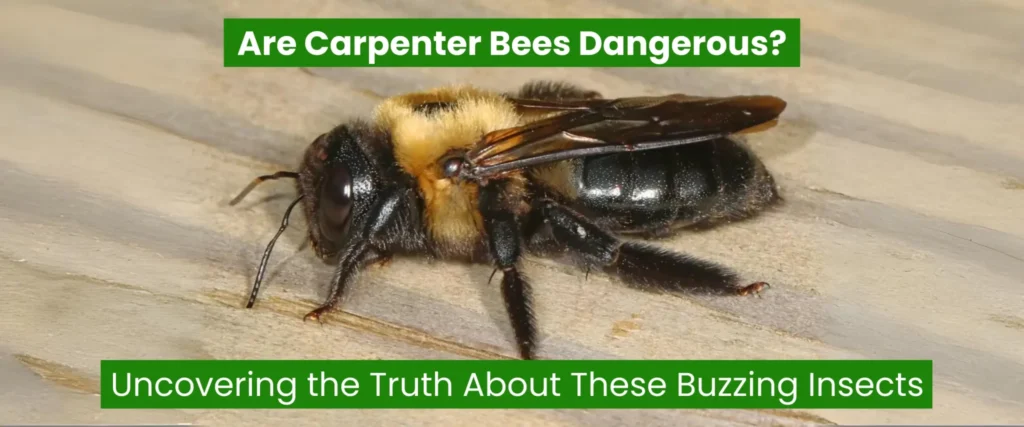
Are Carpenter Bees Dangerous? Uncovering the Truth About Buzzing Insects

Carpenter bees are large, imposing insects often mistaken for bumblebees. However, unlike their fuzzy cousins, carpenter bees have smooth, shiny abdomens. Their name is a testament to their nesting habits: they excavate tunnels in wood to create their homes. While they might seem intimidating, they are generally docile creatures. Understanding these wood-boring insects is crucial for several reasons. Firstly, their nesting activities can cause significant damage to wooden structures like homes, decks, and fences. By recognizing the signs of their presence and understanding their behavior, homeowners can take preventative measures to protect their property. Secondly, while carpenter bees are less aggressive than other stinging insects, it’s essential to know how to interact with them safely. A common question is: Are carpenter bees dangerous? While they can inflict a painful sting if provoked, they are generally not aggressive and prefer to avoid confrontation. However, the real danger lies in the structural damage they can cause to wooden structures. Understanding Carpenter Bees Physical Characteristics Carpenter bees are large, robust insects often mistaken for bumblebees. Size: They are typically larger than honey bees and bumblebees.   Color: Generally black with yellow or white markings on their face (males) or thorax.   Distinctive abdomen: The most noticeable feature is their shiny, hairless black abdomen, unlike the fuzzy abdomens of bumblebees.   Strong bodies: Built for their wood-boring activities, they have sturdy bodies.   Carpenter Bees vs. Other Bees To accurately identify carpenter bees, it’s essential to differentiate them from other bees: Bumblebees: While similar in size, bumblebees have fuzzy bodies, including their abdomens. They are social insects living in colonies, unlike solitary carpenter bees.   Honey bees: Smaller than carpenter bees, honey bees are golden brown with hairy bodies. They live in hives and are crucial pollinators. Common Habitats, Including Carpenter Bees in Attic Carpenter bees prefer to nest in wood. Common habitats include:   Wooden structures: Homes, sheds, decks, and fences.   Trees: Often choosing softwoods like pine or cedar. Dead logs: They may utilize these for nesting. Attics are particularly attractive to carpenter bees due to their sheltered environment and access to wood. They often enter through gaps or cracks in the roof or eaves. Once inside, they create tunnels in the wood framing, causing structural damage.  Behavior and Lifespan Why Do Carpenter Bees Eat Wood? Carpenter bees don’t actually eat wood. The misconception arises from their nesting behavior. These bees chew through wood to create tunnels for their offspring. The wood serves as a protective home for their larvae, not as a food source.   How Do Carpenter Bees Make Holes in Wood? Female carpenter bees have strong mandibles that they use to excavate tunnels in wood. They begin by creating a perfectly round entrance hole, often about the size of a pencil. Once inside, they continue to bore tunnels, creating a series of cells for their eggs.   Lifespan of Carpenter Bees and How Long Do Carpenter Bees Live Without Food? Lifespan: The lifespan of a carpenter bee is typically about one year.   Survival without food: Like other bees, carpenter bees need food, primarily nectar and pollen, to survive. Without a consistent food source, they would not survive for long. Interaction with Humans Are Carpenter Bees Aggressive? Carpenter bees are generally not aggressive. Males, in particular, are known for their territorial behavior, often buzzing around people to intimidate them. However, this behavior is harmless as they lack a stinger. Females are more docile and typically only sting if provoked or handled roughly.   Does Carpenter Bees Sting or Bite? Biting: Carpenter bees do not bite.   Stinging: Only female carpenter bees can sting, and they will usually only do so if they feel threatened or their nest is disturbed.   Are Carpenter Bee Stings Dangerous? While a carpenter bee sting can be painful, it’s typically no more dangerous than a bee sting. However, people with bee allergies should exercise caution.   Do Carpenter Bees Bite or Sting? As mentioned earlier, carpenter bees do not bite. Only female carpenter bees can sting, and they usually only do so as a defensive measure. Prevention and Control How to Keep Carpenter Bees Away Preventing carpenter bees from nesting in your property is often more effective than trying to eliminate them once they’ve moved in. Here are some preventive measures: Seal entry points: Examine your home’s exterior for any cracks or holes where bees might enter. Seal these with caulk or wood filler.   Paint or stain wood: Carpenter bees prefer untreated wood. Painting or staining exposed wood can deter them.   Use synthetic materials: Consider using vinyl, aluminum, or composite materials for outdoor structures.   Maintain good property upkeep: Regularly inspect your property for signs of carpenter bee activity.   Do Carpenter Bee Traps Work? Carpenter bee traps can be effective in reducing the population of carpenter bees in an area. However, they are not a foolproof solution and should be used in conjunction with other prevention methods. Traps typically use a lure to attract bees and then trap them. Safety Concerns Are carpenter bees dangerous to structures? Yes, carpenter bees can cause significant damage to wooden structures. While they don’t consume the wood like termites, their tunneling creates weak points that can compromise the structural integrity of your home or other wooden buildings over time.   Are black bees dangerous? The term “black bee” is too general. There are many types of black bees, including carpenter bees, honey bees, and bumblebees. Some are harmless, while others can sting. To determine if a black bee is dangerous, it’s essential to identify the specific species.   Are black bumble bees dangerous? Black bumble bees are generally not aggressive. Like other bumblebees, they can sting if provoked, but they are typically docile.   Can wood bees sting? The term “wood bee” is often used interchangeably with carpenter bee. As mentioned earlier, only female carpenter bees can sting, and they usually only do so when threatened.   Conclusion Summary of Key Points Carpenter bees are large, solitary insects known for their ability to excavate tunnels in wood. While often mistaken for bumblebees, they have distinct

Bees and Wasps

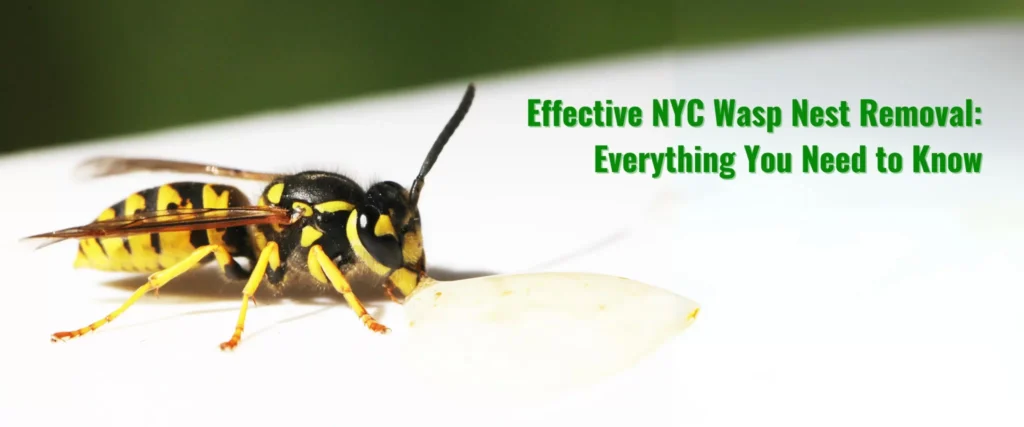
Effective NYC Wasp Nest Removal: Everything You Need to Know

Effective NYC Wasp Nest Removal: Everything You Need to Know Ever been enjoying a picnic in Central Park when a squadron of wasps decides your lunch spread is theirs? Or maybe you’ve heard the menacing buzz of a wasp nest lurking in your fire escape. Wasp encounters are a common experience in NYC, and dealing with a nest on your property can be a real stinger (pun intended!). Safe and effective wasp nest removal is crucial in NYC. This blog will guide you through everything you need to know, from identifying a wasp nest to choosing the best removal method and preventing future infestations. Whether you’re a seasoned New Yorker or a recent transplant, this guide to NYC wasp nest removal will help you keep your home and yard wasp-free. Understanding Wasps How Many Types Of Wasps Are There? While there are over 30,000 identified wasp species worldwide, you’ll likely encounter a few common types in NYC. Here’s a quick rundown: Paper Wasps: These beneficial wasps build exposed, papery nests under eaves or overhangs. They’re generally less aggressive than other wasps unless their nest is disturbed. Bald-faced Hornets: These large wasps construct impressive, football-shaped nests in trees and shrubs. Though intimidating, they typically only attack if threatened. Yellow jackets: These social wasps are the familiar black and yellow buzzing insects you see around picnics. They build their nests underground or in cavities within walls. Unlike some wasps, yellow jackets can sting repeatedly. Yellow Jackets and Wasps Are yellow jackets a type of wasp? The ultimate answer to this question is Yes. They belong to the Vespidae family, which also includes hornets. Here’s a breakdown of their similarities and differences: Similarities: Both have black and yellow markings. Both live in social colonies with a queen and worker wasps. Both have stingers and will use them to defend their nests or themselves. Differences: Appearance: Yellow jackets are smaller than hornets. Bald-faced hornets have a distinctive white face, while paper wasps are slender with long legs. Nesting: Yellow jackets build underground nests, while paper wasps build exposed nests and bald-faced hornets build aerial nests. Aggression: Yellow jackets are generally more aggressive than paper wasps and bald-faced hornets, especially when defending their nest. Wasp Behavior and Life Cycle Does Wasps Die After They Sting? Unlike honeybees, a wasp’s barbed stinger doesn’t detach after stinging. This allows them to sting repeatedly, injecting venom each time. So, no, wasps don’t die after stinging you. How To Keep Wasps From Building Nests? An ounce of prevention is worth a pound of cure (and a potential sting!). Here are some tips to keep wasps from setting up shop in your NYC home: Minimize Food and Drink Sources: Wasps are attracted to sugary drinks and leftover food scraps. Keep outdoor eating areas clean, dispose of garbage properly, and cover your drinks with lids when outside. Seal Up Potential Nesting Sites: Inspect your eaves, porches, and other outdoor areas for cracks or gaps. These are prime real estate for wasps looking to build a nest. Seal openings with caulk or weather stripping. Discourage Existing Wasps: Hang fake wasp nests around your property. Wasps are territorial and avoid building near existing colonies (even fake ones!). You can also try placing bowls of a solution of apple cider vinegar mixed with a few drops of dish soap near potential nesting areas. The scent may deter wasps. Seasonal Tips for NYC: Spring Cleaning: Early spring is prime time for queen wasps to scout for nesting sites. This is the perfect time to inspect your property and seal up potential entry points. Fall Nest Removal: By fall, wasp nests are likely at their largest. If you discover a nest, it’s best to call a professional for safe removal. Don’t attempt to tackle it yourself, especially in the colder months when wasps become more aggressive. NYC Wasp Nest Removal DIY vs. Professional Removal Removing a wasp nest yourself might seem tempting, but it’s important to weigh the risks and benefits: DIY Removal: Pros: Potentially cheaper (though improper removal can lead to property damage or medical bills). Cons: Danger of Stings: Disturbing a nest can provoke an attack, leading to multiple stings. Incomplete Removal: Leaving behind even a small part of the nest can attract remaining wasps. Improper Disposal: Improper disposal of the nest can put you or others at risk. Professional Removal: Pros: Safety First: Trained professionals have the proper equipment and protective gear to remove the nest safely. Guaranteed Removal: They ensure the entire nest is removed, eliminating the wasp problem. Peace of Mind: You can relax knowing the job is done correctly. The Importance of Hiring Professionals: While DIY removal may seem like a cost-saving measure, the risks far outweigh the potential benefits. Professional NYC wasp nest removal experts are trained and equipped to handle the situation safely and effectively. Steps in Professional Wasp Nest Removal Here’s a general outline of what a professional wasp removal service might do: Inspection: The professional will identify the type of wasp and locate the nest. Preparation: The area around the nest will be secured to minimize exposure to people and pets. Removal: Depending on the situation, different removal methods might be used, such as insecticides or physical removal. Disposal: The nest will be safely removed and disposed of. Prevention: The professional can recommend steps to prevent future wasp infestations. Safety Precautions: Professionals prioritize safety during the process. This may involve wearing protective suits, using specialized equipment, and applying insecticides in a controlled manner. Conclusion Understanding wasps, their behavior, and how to prevent them from nesting on your property is key to keeping your NYC home wasp-free. By following the prevention tips outlined above, you can minimize the risk of encountering these stinging insects. Benefits of Professional Removal However, if you discover a wasp nest, don’t attempt to remove it yourself. Professional NYC wasp nest removal services offer a safe and effective solution. They have the expertise and equipment to handle the situation without putting yourself

Scroll to Top