Have you noticed a strange, sweet, musty smell around your mattress or bedroom? You might wonder whether bed bugs are causing it. These tiny insects can produce an unusual odor, especially when an infestation grows or the bugs feel threatened.
So, what do bed bugs smell like? Bed bugs can give off a sweet, musty odor that some people compare to coriander, cilantro, spoiled raspberries, almonds, or marzipan. When crushed or disturbed, they may release a stronger, sharp smell similar to a stink bug.
However, not every bed bug infestation produces a noticeable odor. A few hidden bugs may cause no detectable smell at all.
For NYC residents, understanding these odors can help identify a possible problem before it becomes more serious. Apartments, shared buildings, and frequently used bedrooms can provide plenty of hiding places for these pests.
In this guide, we’ll explain why bed bugs smell, what happens when you crush them, how their odor differs from other household smells, and when professional inspection may be necessary.
Do Bed Bugs Smell?
Yes, bed bugs can produce a smell. They have specialized scent glands that release chemical compounds used for communication and defense.
The smell of bed bugs is often described as sweet, musty, or slightly herbal. Some people notice an odor similar to overripe fruit, while others compare it to damp clothing.
The strength of the smell depends on several factors, including the number of bugs, their activity, whether they have been disturbed, and pest control NYC.
In a small infestation, you may never notice an unusual scent. When more bed bugs gather in one area, their combined odor may become easier to detect.
A musty bedroom does not automatically mean bed bugs are present. Poor ventilation, moisture, mold, and dirty laundry can create similar smells.
That is why odor should be treated as a possible warning sign rather than proof of an infestation.
What Does a Bed Bug Infestation Smell Like?
The odor associated with bed bugs can change depending on the size of the infestation and the insects’ behavior.
Sweet and Musty Odor
A common description of bed bug odor is a combination of sweetness and mustiness.Some people compare it to coriander, cilantro, or slightly spoiled fruit. Others describe it as an unusual smell coming from bedding or upholstered furniture.This scent may be more noticeable near areas where many bed bugs are hiding.
Damp or Moldy Laundry Smell
A larger infestation can sometimes create a stale odor resembling damp clothing or an enclosed room.
However, a similar smell can come from moisture or mold. You should inspect for physical evidence before assuming bed bugs are responsible.
Sharp and Pungent Odor
When bed bugs feel threatened, they can release alarm chemicals that create a sharper smell.This odor is different from the mild, sweet scent sometimes associated with an undisturbed infestation.
Rusty or Metallic Smell
Some people report a rusty or metallic smell around heavily infested bedding.Blood spots and accumulated waste may contribute to unpleasant odors, but a metallic smell is not a reliable way to identify bed bugs.
If you notice unexplained odors along with dark mattress stains or live insects, a closer inspection is worthwhile.
Why Do Bed Bugs Smell?
Bed bugs produce odors because they use chemical signals to communicate and respond to threats.Their scent glands release compounds that can affect the behavior of nearby bed bugs.These chemicals serve several purposes.
1. Warning Other Bed Bugs About Danger
When threatened or disturbed, a bed bug may release alarm pheromones.
These chemicals can signal danger to other bed bugs, causing them to move away or become more active.
2. Communicating With Other Bed Bugs
Chemical signals help bed bugs respond to their surroundings and interact with one another.
Different chemical compounds can influence their behavior.
3. Releasing Odors When Disturbed
Moving infested furniture, lifting a mattress, or crushing a bed bug can release noticeable odors.This explains why some homeowners first notice a strange smell while inspecting their beds.
4. Odor Accumulation in Larger Infestations
When many bed bugs gather in mattress seams, furniture joints, or wall cracks, their combined chemical emissions may become more noticeable.The odor itself does not tell you exactly how many bugs are present.
What Do Bed Bugs Smell Like When You Kill Them?
When a bed bug is crushed, it may release a sharp, unpleasant odor that is stronger than the scent of an undisturbed insect.
Some people describe it as bitter, herbal, or similar to a crushed stink bug.
The smell can come from defensive chemical compounds released during crushing. If the insect recently fed, its body contents may also leave a bloodstain.
Why Do Bed Bugs Smell When You Kill Them?
Bed bugs contain scent-producing chemicals that can be released when their bodies are damaged.Crushing a bug may suddenly expose these compounds, making the smell more noticeable.
A recently fed bed bug may also release blood when crushed, but the distinctive odor is primarily associated with its chemical secretions.
Do Bed Bugs Stink When Killed?
They can, but the smell is not always strong enough for a person to notice.A single crushed bug may produce only a faint odor. The intensity can vary with the insect’s condition and how sensitive someone is to the smell.
What Causes the Bed Bug Smell When Crushed?
The bed bug smell when crushed comes largely from volatile chemical compounds associated with their scent glands.
Some of these chemicals belong to a group called aldehydes, which can produce sharp, distinctive odors.The smell usually fades rather than remaining permanently in the room.
Crushing bed bugs is not a reliable control method. It may kill an individual insect, but it does not eliminate hidden bugs or their eggs.
Do Bed Bugs Smell Like Stink Bugs?
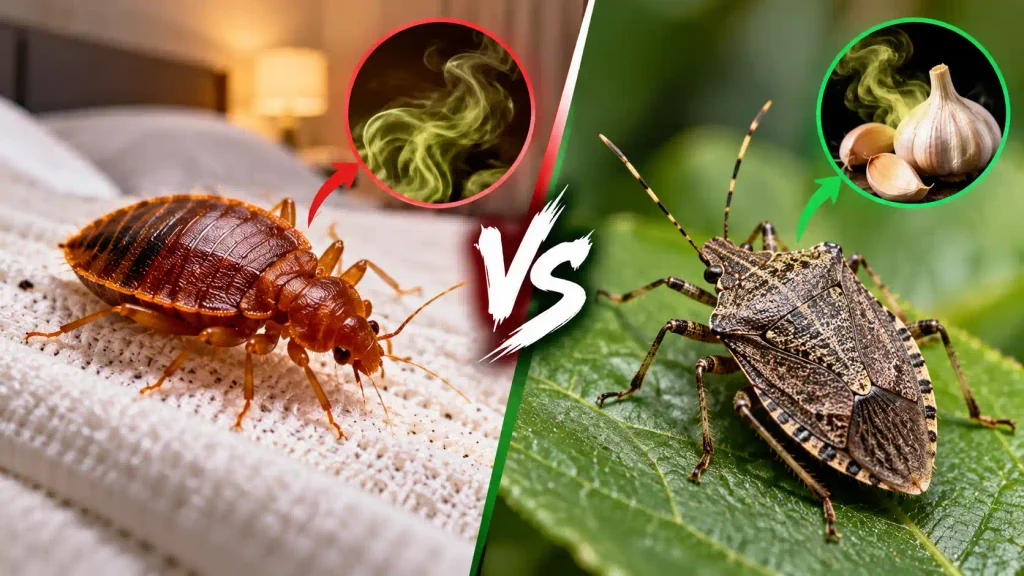
Bed bugs and stink bugs can both release unpleasant odors when disturbed, but they are different insects.
Both use chemical compounds for defense and communication, which helps explain why their smells are sometimes compared.
Stink bugs are generally larger and more likely to be noticed around windows, doors, and exterior walls.
Bed bugs are smaller, flatter insects that typically hide near sleeping or resting areas.
| Feature | Bed Bugs | Stink Bugs |
| Appearance | Small, oval, flattened | Larger, shield-shaped |
| Typical color | Reddish brown | Brown or green, depending on species |
| Common hiding places | Mattresses, bed frames, furniture | Windows, walls, outdoor plants |
| Odor | Sweet-musty or sharp when disturbed | Strong, pungent defensive odor |
| Feeding behavior | Feed on blood | Primarily feed on plants |
Finding a smelly insect does not necessarily mean you have bed bugs. Its appearance and location are more useful for identification.
Can You Smell Bed Bugs Before Seeing Them?
Sometimes, but smell alone is not a dependable early detection method.
A large infestation may produce an odor noticeable before someone discovers the insects. However, smaller infestations often have little or no detectable scent.Human sensitivity to these odors also varies.
Some people recognize a strange smell immediately, while others cannot detect it even when bed bugs are present.
In NYC apartments, ordinary household odors can make detection even more difficult.
Cooking smells, cleaning products, laundry, humidity, and limited ventilation may hide or resemble pest-related odors.If you suspect an infestation, look for physical signs instead of relying only on your sense of smell.
Our guide to Signs of Bed Bugs in NYC can help residents recognize additional warning signs around their homes.
What Do Bed Bugs Look Like?
Knowing what a bed bug look like is more useful than relying on odor alone.
Adult bed bugs are small, wingless insects with flat, oval bodies. They are usually reddish brown and approximately the size of an apple seed.Their appearance changes slightly after feeding. A recently fed bed bug may look longer, fuller, and darker.
Young bed bugs, called nymphs, are smaller and often pale or translucent before feeding.
You may notice the following characteristics:
- Six legs and two antennae.
- A flattened, oval-shaped body.
- No functional wings.
- Reddish-brown coloring in adults.
- A more swollen body after a blood meal.
Bed bugs cannot fly or jump. They move by crawling and often hide in narrow cracks close to where people sleep.
If you find a suspicious insect, save it in a sealed container or take a clear photograph for identification.
How to Confirm a Bed Bug Infestation in Your NYC Home
A strange odor may raise suspicion, but identifying physical evidence is the best next step.Check your sleeping area carefully, especially mattress seams, bed frames, headboards, and nearby furniture.
1. Live Bed Bugs
Finding a live insect is one of the clearest warning signs.
Look along mattress piping, beneath box springs, and inside small furniture joints.
Bed bugs often remain hidden during the day, so an infestation may exist even when no insects are immediately visible.
2. Dark Fecal Spots
Bed bug droppings often appear as tiny black or dark-brown spots.
These stains may be found on mattress seams, sheets, wooden bed frames, or nearby walls.
On absorbent surfaces, the spots may look similar to small ink marks.
3. Bloodstains on Bedding
Small reddish or rusty stains can appear on sheets or pillowcases.
These may result from a fed bed bug being accidentally crushed.
Bloodstains alone are not proof of an infestation, but they deserve attention when accompanied by other signs.
4. Shed Skins and Eggs
Growing bed bugs shed their outer skins as they develop.
You may find pale, empty skins around hiding places.
Their eggs are tiny, whitish, and difficult to see without close inspection.
5. Unexplained Skin Reactions
Some people develop itchy red bumps after being bitten.
However, skin reactions vary widely, and some people experience no visible reaction.
Other insects and skin conditions can produce similar marks.
Our article on Bed Bug Bites vs Mosquito Bites explains why bite appearance alone cannot reliably identify the pest.
For a broader inspection checklist, read How to Tell If You Have Bed Bugs in Your NYC Apartment.
Where Does the Bed Bug Smell Come From in a Bedroom?
A bed bug odor is most likely to be noticed around places where the insects gather.Common hiding areas include mattress seams, box springs, headboards, bed frames, upholstered chairs, and cracks near sleeping areas.
Bed bugs prefer narrow, protected spaces where they can remain close to a blood meal.
They may also hide behind loose wallpaper, baseboards, electrical outlet covers, or furniture joints.In a heavily infested room, the smell may seem to come from the mattress or surrounding furniture.
However, odors can spread through a room, so the strongest-smelling area is not always the exact hiding place.
Avoid dismantling electrical outlets or applying chemicals inside them yourself.
For NYC residents dealing with suspicious furniture, How Furniture Pest Control Can Help You Eliminate Bed Bugs provides additional information about addressing pests in household furnishings.
Can Bed Bugs Smell Blood?
Bed bugs are attracted to human hosts through several sensory cues, but the idea that they locate people simply by smelling blood is misleading.
Research shows that bed bugs respond to carbon dioxide, body heat, and certain human odors.
These signals help them locate a potential host, especially when people are resting or sleeping.
Do Bed Bugs Smell Blood From Far Away?
There is no good evidence that bed bugs can detect blood through intact skin from across a room in the way this question suggests.
They do not need an open wound to feed.
Instead, they use their specialized mouthparts to pierce the skin and take a blood meal.
Can Bed Bugs Smell Blood on Sheets?
Blood on bedding is not established as a primary signal that attracts bed bugs.They are more strongly associated with cues from a living host and with hiding places near resting areas.
Washing stained bedding is sensible, but it will not eliminate an infestation hidden in furniture or room cracks.
Why Are Bed Bugs Difficult to Detect in NYC Apartments?
Bed bugs are particularly challenging in apartments because they can hide in small spaces and move between nearby units.
Shared walls, plumbing openings, hallways, and the movement of infested belongings may contribute to their spread.They can also enter homes through luggage, secondhand furniture, or personal belongings.An apartment may look clean and well-maintained while still having bed bugs.
Good housekeeping can make inspections easier, but cleanliness alone does not prevent an infestation.
Another challenge is that bed bugs may remain hidden for long periods and do not always produce an obvious smell.
If you want to understand their behavior and survival, read Why NYC Bed Bugs Are So Hard to Kill.
Residents in the Bronx can also review Signs of Bed Bugs in Bronx for additional local guidance.
What Should You Do If You Notice a Bed Bug Smell?
If your bedroom has an unusual musty odor, avoid assuming the cause without checking for other evidence.
Start by examining your mattress, bed frame, and nearby furniture. Use a flashlight to inspect seams, cracks, and other narrow spaces.
If you find a suspicious insect, collect it carefully for identification rather than crushing it.Wash and dry potentially infested bedding according to fabric instructions. When appropriate, using a hot dryer cycle can help kill bed bugs and eggs in washable items.
Keep cleaned belongings separate from potentially infested materials.
Avoid moving furniture or bedding into other rooms without precautions. Doing so may spread the insects to previously unaffected areas.
Do not use household foggers or random pesticide mixtures as a substitute for a proper treatment plan. These products may fail to reach hidden insects and can create unnecessary exposure risks.If you rent an NYC apartment, inform your landlord or property manager promptly. New York City has specific requirements concerning bed bug complaints and landlord responsibilities.
If you want to understand the recovery process, How Long Does it Take to Get Rid of Bed Bugs after Removal? explains why follow-up monitoring is important.
How Can You Prevent Bed Bugs From Entering Your Home?
Bed bugs can enter homes through luggage, furniture, clothing, and other belongings. Prevention focuses on reducing the chance of bringing them indoors and identifying problems early.When returning from a trip, inspect luggage and keep suitcases away from your bed until you have checked them.
Examine secondhand furniture before bringing it inside, paying close attention to seams, joints, and hidden spaces.
Use bed bug-resistant mattress encasements where appropriate. These can make inspections easier and help contain insects already trapped inside a properly installed encasement.
Reduce clutter near sleeping areas so potential hiding places are easier to inspect.
Regular vacuuming can remove some exposed insects, but it cannot guarantee complete removal of an infestation.
When staying in hotels, inspect the sleeping area before unpacking and avoid placing luggage directly on the bed.Our article How to Avoid Bed Bugs While can provide additional travel-related prevention guidance.
When Should You Call a Professional Bed Bug Exterminator?
You should consider a professional inspection when you discover live bed bugs, repeated dark stains around your mattress, shed skins, or several suspicious signs occurring together.
A strong musty smell combined with visible evidence can also justify an inspection.Professional pest control technicians can examine likely hiding places, identify the pest, and recommend a treatment plan based on the findings.
Depending on the situation, bed bug management may involve heat treatment, targeted insecticide applications, freezing methods, monitoring, or a combination of approaches.
Best@Pest Exterminating offers Bed Bug Removal Services NYC, including bed bug cleanouts, K9 inspections, heat treatments, chemical treatments, and freezing treatments.Treatment recommendations depend on the infestation, property conditions, and inspection results.
If you are comparing treatment options, Bed Bug Exterminator Cost in NYC can help you understand the factors that may affect pricing.
For general pest concerns beyond bed bugs, explore Pest Control NYC to learn more about the company’s services.
Bed Bug Inspection and Treatment in NYC
New York City has many different housing environments, including high-rise apartments, brownstones, townhouses, and multifamily buildings.
These properties can present different challenges when inspecting for hidden pests.
A bed bug problem in one apartment may require coordination with building management, especially when neighboring units could be affected.
Best@Pest Exterminating serves residential and commercial customers in New York City and surrounding service areas.
The company’s website identifies the following local coverage areas.
A professional inspection can help determine whether an unusual smell is associated with bed bugs or another household issue.
For additional information about common misconceptions, Bed Bug Myths and Facts explains why familiar assumptions about these insects can be misleading.
You can also explore Bed Bug Blues for more information about dealing with the stress and inconvenience of an infestation.
Frequently Asked Questions About Bed Bug Smells
1. Do bed bugs have an odor even if there are only a few?
Yes. Individual bed bugs can release odor-producing chemicals, but a small infestation may not create a smell that people can detect. The absence of an odor does not mean your home is free of bed bugs.
2. Why do bed bugs stink when you kill them?
Crushing a bed bug can release chemical compounds associated with its scent glands. These substances may produce a sharp, unpleasant smell. The strength varies, and not everyone will notice it.
3. Can you smell bed bugs through a mattress?
An odor from a large infestation may be noticeable around a mattress, but smell cannot reliably tell you whether insects are inside it. Inspect seams, folds, and nearby hiding places for physical evidence.
4. Do bed bugs smell blood or human sweat?
Bed bugs respond to human body odors, carbon dioxide, and warmth when locating hosts. They are not known to depend on smelling blood through the skin to find someone to bite.
5. Can a room smell like bed bugs without having an infestation?
Yes. Damp laundry, mold, moisture, old furniture, and other household sources can create similar odors. A proper inspection is needed to distinguish a bed bug infestation from other causes.
6. Will the smell disappear after bed bug treatment?
An odor associated with an infestation may fade after successful treatment and cleaning. However, the disappearance of a smell does not prove every bed bug or egg has been eliminated. Follow-up inspections or monitoring may still be necessary.
Final Thoughts: Don’t Rely on Smell Alone to Identify Bed Bugs
Bed bugs can produce a sweet, musty smell, sometimes compared to coriander, spoiled fruit, or damp laundry. When disturbed or crushed, they may release a sharper odor.
However, odor alone is not a reliable way to confirm an infestation.
The most useful warning signs include live insects, dark fecal spots, shed skins, and evidence around sleeping areas.
If you notice a strange smell along with these signs, identifying the problem early can help prevent further spread.
Best@Pest Exterminating provides professional bed bug inspection and treatment services for NYC properties. If you suspect an infestation, visit Best@Pest Exterminating or call 718-284-7378 to discuss your concerns and request an inspection.