Bed bugs are easy to miss because they hide in narrow cracks, feed while people rest, and do not always cause an obvious skin reaction. In Bronx homes and shared buildings, early detection matters because a small problem can become harder to control once bugs spread.
The strongest warning is not one bite. Look for physical evidence such as live bugs, dark droppings, shed skins, eggs, and reddish stains. NYC Health notes that adults are about the size of an apple seed, and some people have no reaction to bites.
What Early Bed Bug Activity Looks Like in Bronx Homes
The early signs of bed bugs are often easy to confuse with ordinary stains or other insect activity. You may notice rusty-red marks on sheets, tiny dark dots around mattress seams, pale shed skins, or a live insect near the bed frame. Eggs are very small and can hide in tight crevices.
People often search for bed bug first signs after waking with unexplained itching. Bites raise concern, but they are not proof. Fleas, mosquitoes, and skin irritation may look similar, so inspect the sleeping area for physical evidence.
Physical Evidence to Check Around Beds and Furniture
The most useful bed bug signs in bed are usually found along mattress piping, seams, box springs, headboards, bed frames, and nearby furniture. Rust-colored marks may come from crushed bugs. Dark brown or black dots can be fecal material. You may also find pale cast skins left behind as young bugs grow.
EPA guidance recommends checking for reddish stains, fecal spots, eggs, shed skins, and live insects. Physical evidence is more reliable than bites alone.
The broader term bed bug signs also includes evidence away from the mattress. Bed bugs may hide in nightstands, sofa seams, baseboards, picture frames, wall cracks, loose wallpaper, and furniture joints. A sweet or musty odor can occur in a heavy infestation, but odor alone is not a good early-detection method.
Can you see bed bugs with the naked eye?
Yes. Adult bed bugs are visible without a microscope. They are generally reddish-brown and about 5 to 7 millimeters long. Young nymphs are smaller and may look translucent or pale, so they can be harder to notice. Eggs are tiny and pearl-white.
If you find a suspicious insect, save a sample in a sealed clear bag or on transparent tape for professional identification.
How Bed Bugs Get Into Bronx Properties
A common question is how do you get bed bugs if your home is clean. Cleanliness is not the cause. Bed bugs are hitchhikers that can arrive on luggage, backpacks, clothing, used furniture, or other belongings. They may also move between rooms or units in multi-family buildings.
If you are asking what causes bed bugs, think about introduction and movement rather than dirt. Travel, secondhand furniture, guests, building turnover, and movement between infested areas can bring them into a property. New York State health guidance notes that bed bugs can travel in luggage and belongings and between rooms in apartment buildings and hotels.
Clutter can create more hiding places, but even a well-maintained Bronx home or business can get an infestation. For common misconceptions that can delay action, direct readers to Bed Bug Myths and Facts.
Common Hiding Places in Bronx Homes and Businesses
Bed bugs usually stay close to places where people sleep or remain still for long periods. In bedrooms, inspect mattress seams, box springs, headboards, bed-frame joints, screw holes, nightstands, and baseboards. In living rooms, check sofas, recliners, cushions, and furniture seams.
In multi-unit Bronx properties, wall gaps, utility penetrations, and nearby units may also need attention. NYC Health advises building owners to inspect units across, above, and below an infested apartment when activity is confirmed.
For businesses, quick reporting is important. Hotels, offices, waiting areas, healthcare facilities, property-management buildings, and other locations with upholstered furniture should investigate suspected activity before furniture, bags, or other items are moved to unaffected areas.
Bed Bug Bites and Skin Reactions
When people search for skin early signs of bed bugs, they are usually looking for a bite pattern. Bed bug bites may look like small red or swollen marks and can itch. They may appear in a line, cluster, or random pattern. Reactions vary widely, and some people show no physical signs.
Understanding bed bugs and symptoms also means knowing their limits. CDC states that bed bugs are not known to spread disease to people, although bites can cause itching, loss of sleep, and, rarely, allergic reactions. Heavy scratching may also lead to a secondary skin infection.
For pest identification, rely on a property inspection rather than bite appearance alone.
Quick Bed Bug Inspection Checklist for Bronx Properties
- Remove bedding carefully and inspect mattress seams, piping, labels, and corners.
- Check the box spring, bed frame, headboard, screw holes, and nearby furniture joints.
- Look for dark dots, reddish stains, cast skins, tiny eggs, or live insects.
- Inspect sofas, recliners, baseboards, wall cracks, and other resting areas.
- Avoid moving loose items from a suspected room into an unaffected room.
- Photograph or save a sample when possible for identification.
If you find several types of evidence, avoid moving furniture or loose belongings into unaffected rooms.
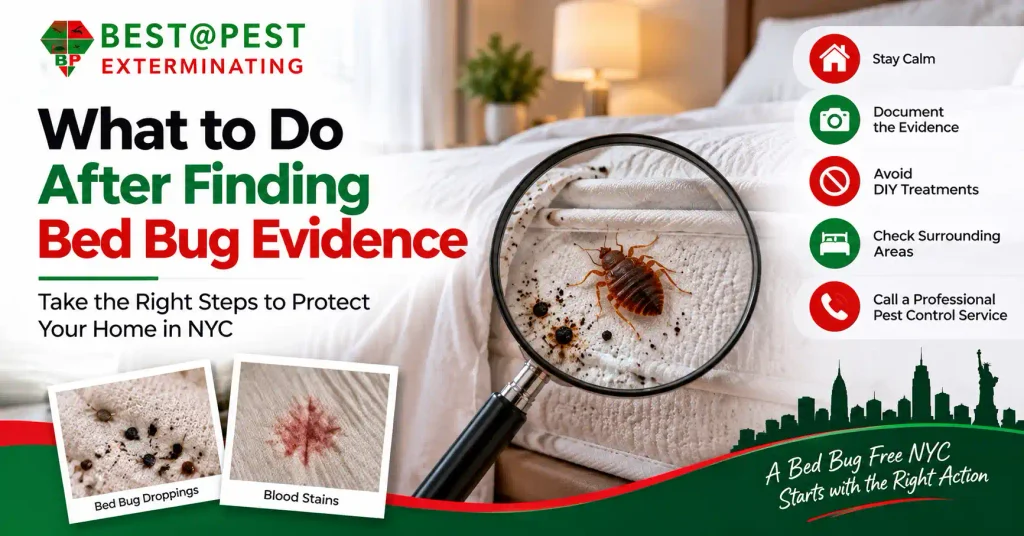
What to Do After Finding Bed Bug Evidence
Start by containing the problem. Keep suspected belongings in the affected area until you have a plan. Clothing and bedding that can tolerate heat may be placed in a hot dryer according to fabric instructions. EPA guidance explains that high-temperature drying is an important non-chemical control option and that washing alone generally will not eliminate every bug.
Do not immediately throw away your mattress or furniture. NYC Health says furniture can often be treated and should generally be discarded only when acceptable treatment is not possible or a pest management professional advises disposal.
For a step-by-step home response, use How to Get Rid of Bedbugs at Home. Home steps work best as part of a complete plan with inspection, monitoring, and follow-up.
Bronx homeowners and property managers dealing with broader pest issues can also use Pest Control Services in Bronx to reach the local service page without turning this article into a sales page.
Bronx Tenants, Landlords, and 311 Bed Bug Rules
NYC tenants have specific protections when an infestation occurs in rental housing. NYC Health identifies bed bugs as a Class B housing violation and states that landlords have 30 days to correct the problem and prevent affected units from becoming infested again. Tenants can also make a bed bug complaint through 311.
Owners and managers should think beyond one bed or one room. NYC guidance says that when an apartment is confirmed to have an infestation, units directly across, above, and below should be notified and inspected. HPD also states that property owners must use properly licensed pest management professionals when pesticide treatment is needed in apartments.
This building-level approach is one reason Pest controls nyc planning matters in dense residential properties. Treating only one visible area can miss nearby activity.
Why DIY Sprays Often Fail
Successful control usually requires more than one product or one visit. EPA recommends an integrated pest management approach that can combine inspection, heat, laundering, encasements, monitoring, vacuuming, and properly selected pesticides. Hidden insects and eggs can survive incomplete treatment, so follow-up matters.
One common mistake is using bug bombs or total-release foggers as the only treatment. EPA warns that foggers may not reach the cracks and crevices where these insects hide and should not be used as the sole control method. Incorrect use can also create fire, explosion, or exposure risks.
For a deeper explanation of hidden harborages, resistance, eggs, and repeat activity, link to Why NYC Bed Bugs Are So Hard to Kill.
Professional Bed Bug Treatment for Bronx Properties
Professional service should begin with confirmation and an inspection of the affected area. Treatment may combine chemical and non-chemical methods based on infestation level and risk of spread. Monitoring and follow-up are important because fewer bugs after one treatment does not always mean the infestation is gone. NYC guidance specifically recommends professional pest management for established infestations.
For readers comparing budgets, Bed Bug Exterminator Cost in NYC can explain pricing separately from this identification guide. That keeps this article focused on detection.
Commercial properties should also record where evidence was discovered and which rooms or areas were inspected. Clear communication between employees, tenants, property managers, and pest professionals can reduce the chance of activity being overlooked or moved elsewhere.
How to Reduce the Risk of Bed Bugs Returning
After treatment, focus on preventing reintroduction and catching new activity early. Inspect secondhand furniture before bringing it indoors. When traveling, keep luggage off beds and upholstered furniture, then inspect it before unpacking. NYC Health also recommends reducing clutter, sealing cracks and crevices, using protective mattress and box-spring covers, and using bed-leg traps for monitoring.
Monitoring can help catch a new problem early.
For a dedicated post-treatment guide, use get Rid of Bed Bugs after Removal as the next internal resource.
When to Call Best@Pest Exterminating in the Bronx
Consider a professional inspection when you find live insects, eggs, repeated fecal spotting, cast skins, or evidence in more than one room. Professional help is also useful when a tenant reports activity in a multi-unit building or when DIY steps have not stopped new evidence.
Best@Pest Exterminating serves Bronx homeowners, property managers, and businesses that need a clear inspection and treatment plan. The company’s Bronx service page covers residential and commercial pest-control needs in the borough.
Frequently Asked Questions About Bed Bugs in the Bronx
1. Are bites enough to confirm an infestation?
No. Bite reactions differ and may resemble other insect bites or skin irritation. Look for physical evidence such as live insects, fecal spots, shed skins, eggs, or reddish stains.
2. Where should I check first in a Bronx apartment?
Start with mattress seams, the box spring, headboard, bed frame, and nightstand. Then inspect nearby baseboards, upholstered furniture, and wall cracks.
3. Can a clean apartment still get them?
Yes. They can arrive on luggage, used furniture, clothing, bags, or other belongings and can also move between units in multi-family buildings. Cleanliness alone does not prevent an infestation.
4. Should I throw away my mattress?
Not automatically. Many mattresses and furniture items can be treated or encased. Throwing items away without a plan may spread insects through a building.
5. What should a Bronx tenant do if a landlord does not respond?
Document the problem and notify the landlord or property manager. NYC residents can use 311 to report a bed bug condition when the issue is not corrected.
6. Can one treatment eliminate every bed bug?
Sometimes activity drops quickly, but successful control often requires monitoring and follow-up. An integrated approach is more reliable than assuming one spray or one visible improvement means the problem is gone.
Final Takeaway
The best response to suspected bed bugs is to confirm the problem early, avoid spreading belongings, and choose a treatment plan based on physical evidence rather than bites alone. Bronx apartments and commercial properties can be challenging when rooms or units share walls, utilities, and common areas, so communication and follow-up matter.
If you are seeing stains, droppings, shed skins, eggs, or live bugs in your Bronx home or business, contact Best@Pest Exterminating for a professional inspection. Call now to discuss what you are seeing and get a clear next step before the problem has more time to spread.