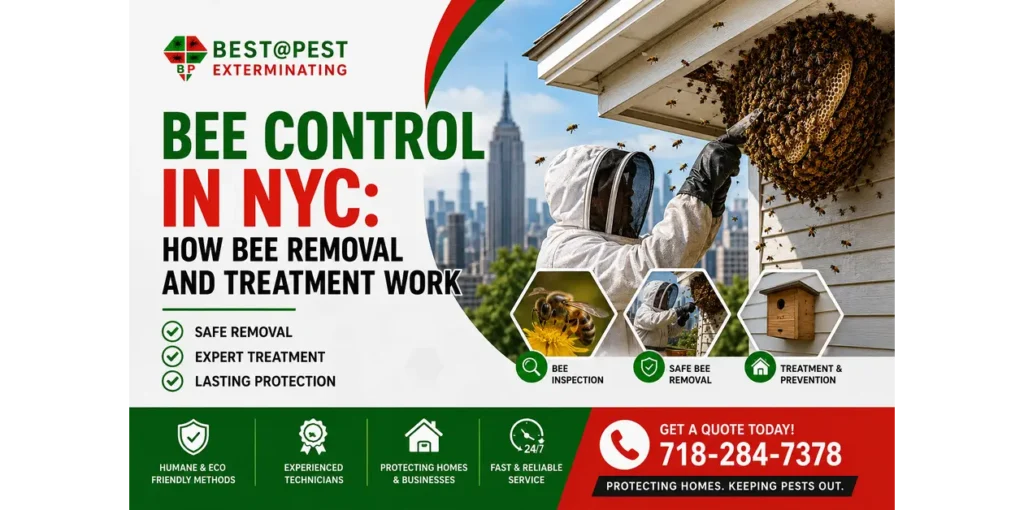
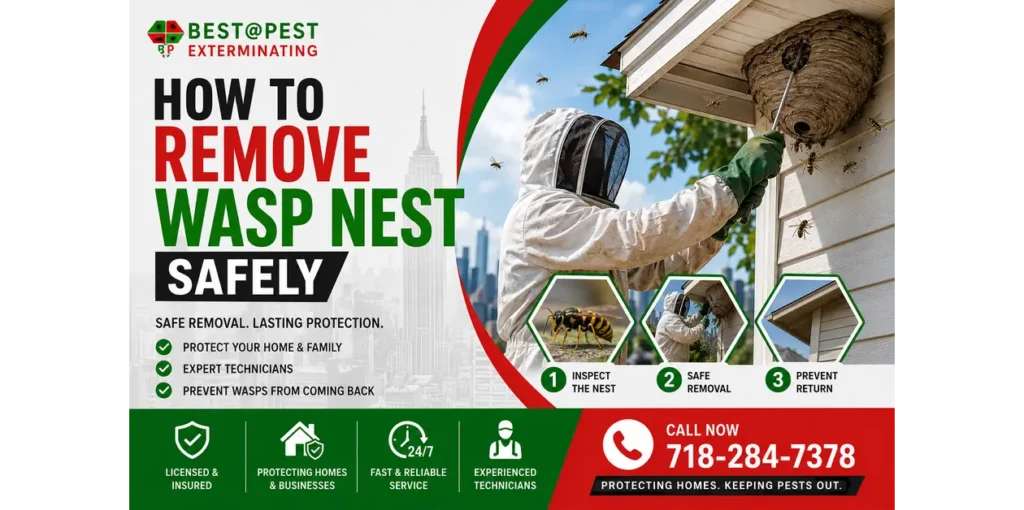
A bee or wasp nest can quickly become a safety concern when it appears close to people. You may find insects around a doorway, roofline, backyard, storefront, balcony, wall opening, or another busy part of your property.
If this happens, do not disturb the nest.
Emergency Bee & Wasp Removal Services NYC can help when stinging insects create an immediate risk around a home or business. A professional can identify the insect, locate the nest, assess the risk, and determine the right treatment.
This matters because bees, wasps, hornets, and yellow jackets do not all behave the same way.
NYC Health says a bee hive or nest does not necessarily need removal unless it poses a direct threat. The agency also warns that removing a wasp nest yourself can be dangerous.
This guide explains when you need urgent help, what professional removal involves, and how to reduce future nesting around your NYC property.
When Is Bee or Wasp Removal an Emergency?
Seeing one bee near flowers is not normally an emergency.
The situation becomes more serious when insects are nesting close to people or repeatedly entering an occupied area.
For example, a nest beside a front door can be difficult to avoid. Heavy wasp activity around a commercial entrance can also put customers and workers at risk.
You may need emergency wasp removal in NYC when there is an active nest near a busy walkway, entrance, playground, patio, or other high-traffic area.
Repeated stings or insects entering living spaces also deserve quick attention.
If someone develops trouble breathing or another severe reaction after a sting, treat that as a medical emergency rather than a pest-control problem.
How Do You Know If There Is a Bee or Wasp Nest?
Repeated insect activity is often the first clue.
Watch from a safe distance. You may notice insects entering and leaving the same opening every few minutes.
The opening could be around a roofline, siding, wall cavity, tree, ground area, or another protected location.
You might also see a visible paper-like nest.
Do not put your hand, face, phone, or another object close to an opening to investigate.
If you are unsure what you are seeing, our guide on How to Identify a Bee, Wasp can help you understand the basic differences before arranging service.
What Type of Stinging Insect Is on Your Property?
Identification is an important part of professional treatment.
Bees and wasps are often grouped together, but their behavior and control needs can be different.
Honey Bees
Honey bees are important pollinators.
A honey bee colony should not automatically be treated the same way as a threatening wasp nest.
NYC Health says bee swarms are generally not aggressive and should only be removed by professional beekeepers. The city currently instructs residents who see a bee swarm to call 911.
This makes identification important before arranging bee removal NYC.
Wasps
Wasps can become defensive around their nests.
They can also sting more than once. NYC Health warns against attempting to remove a wasp nest yourself and recommends contacting a licensed pest-control operator.
Professional wasp removal NYC can be especially important when a nest is close to people or difficult to reach.
Hornets
Hornets are wasps, but homeowners often use the names interchangeably.
Knowing the insect helps determine the appropriate response.
Our guide to the Difference Between Wasps and Hornets explains the key distinctions in more detail.
If a hornet nest is located close to an occupied area, professional hornet nest removal NYC may be needed.
Yellow Jackets
Yellow jackets are another type of wasp.
They may use protected cavities or ground locations for nesting. Heavy traffic in and out of one small opening can indicate an active nest.
Avoid disturbing the area.
Professional yellow jacket removal NYC starts by identifying the nesting location and assessing the risk around it.
When Is Wasp Season in New York City?
Stinging-insect activity changes with the seasons.
You are more likely to notice wasps when colonies are active and workers are regularly moving between their nest and food sources.
Instead of waiting until a large nest becomes obvious, watch for repeated activity around the same part of your property.
Our detailed When Is Wasp Season in NYC guide explains when homeowners should pay closer attention to nesting activity.
Seasonal awareness can be especially useful for properties that have experienced nests before.
What Should You Do When You Find an Active Nest?
Keep your distance first.
Do not hit the nest. Do not shake it. Do not poke it with a tool. Avoid trying to knock it down with water.
Keep children and pets away from the area.
If the nest is close to a window or door, use another route when possible until it has been evaluated.
NYC Health specifically warns that trying to remove a wasp nest yourself can be dangerous.
If the nest presents an immediate threat, emergency bee removal NYC service can help determine what should happen next.
Should You Spray a Bee or Wasp Nest Yourself?
DIY spraying can put you dangerously close to defensive insects.
It can also be difficult to determine where the colony is located when insects are disappearing into a wall or roof opening.
Pesticides add another concern.
NYC Health says pesticides must be used according to their labels and warns against foggers, bombs, and illegal or unlabeled pesticide products.
This is why professional wasp removal NYC is usually a safer approach for a threatening nest.
If you want to understand safe approaches before taking action, read How to Safely Remove Wasps, Bees, and Hornet Nests in Queens.
What Happens During Professional Bee and Wasp Removal?
Good pest control should start with an inspection rather than immediate spraying.
The Insect Is Identified
The technician first determines whether the activity involves bees, wasps, hornets, yellow jackets, or another insect.
Correct identification affects the next step.
The Nest Location Is Assessed
The technician then looks at where the insects are traveling.
An exposed nest under an eave is different from activity inside a wall cavity.
Accessibility, nest location, property type, and proximity to people can all affect the treatment plan.
The Risk Is Evaluated
Not every nest creates the same risk.
A nest beside a front door requires different consideration from insects located far from normal human activity.
NYC Health says nests do not necessarily require removal unless they pose a direct threat.
The Appropriate Treatment Is Selected
The technician can then recommend an approach based on the species and location.
A licensed bee and wasp exterminator NYC property owners hire should also follow applicable pesticide requirements when pesticide treatment is necessary.
NYC requires certain pesticide applications at residential and commercial properties to be performed by appropriately licensed professionals.
What If Bees or Wasps Are Inside a Wall?
This situation needs extra care.
Repeated insects entering a small opening in siding, brickwork, a roofline, or another structural area may indicate activity inside a cavity.
Do not immediately seal an active opening.
You could leave the insects trapped inside or change where they travel.
A bee exterminator NYC professional should first determine whether the insects are actually bees and what kind of colony is present.
A wasp exterminator NYC may recommend a different treatment when the activity involves wasps.
Identification should come before treatment.
How Much Does Bee or Wasp Removal Cost in NYC?
There is no single price for every property.
The cost can depend on the insect, nest size, nest location, accessibility, property type, and treatment required.
An exposed and accessible nest may be simpler to address than a colony located inside a structural cavity.
Emergency scheduling can also affect pricing.
If price is one of your main concerns, our Bee Removal Cost in NYC guide explains the factors that can affect the final estimate.
Ask what is included before approving any treatment.
Can You Get Same-Day Wasp Removal in NYC?
Service availability varies.
If you are looking for same day wasp removal NYC, call the company and explain the situation clearly.
Tell them where the activity is occurring. Mention whether the nest is visible, whether insects are entering an occupied room, and whether anyone has already been stung.
This information can help the provider understand the urgency.
Avoid assuming that “same day” guarantees immediate arrival. Ask about current availability when you call.
What Should You Do After a Bee or Wasp Sting?
First, move away from the nest or insect activity.
Honey bees can leave a stinger behind. NYC Health recommends removing it quickly using a scraping motion rather than squeezing it. A cold compress can help reduce discomfort.
Wasps can sting repeatedly.
If someone has difficulty breathing or shows signs of a severe allergic reaction, seek emergency medical help immediately.
NYC Health also recommends medical attention in circumstances such as multiple stings or a sting inside the mouth, throat, or eye.
Pest-control service should never delay emergency medical care.
Who Handles Bee and Wasp Problems at NYC Rental Properties?
Tenants should report an active nest or repeated indoor activity to their landlord, superintendent, or property manager.
NYC Health states that residential and commercial property owners are responsible for getting rid of pest bees or wasps on their properties.
Avoid climbing onto roofs or accessing unsafe exterior areas yourself.
Building management can arrange an inspection when a nest creates a threat.
For other pest problems affecting the property, our pest control NYC service provides information about broader treatment options.
How Can You Prevent Future Bee and Wasp Nests?
You cannot prevent every bee or wasp from flying near your property.
The goal is to make high-traffic parts of the building less suitable for nesting.
Inspect the exterior for damaged screens and openings around building features. Once an active nest has been properly addressed, suitable gaps may be repaired when appropriate.
Outdoor food also matters.
Clean up sugary spills and food after outdoor meals. Keep garbage properly contained.
NYC Health recommends cleaning up food and drinks outdoors and keeping trash cans sealed to reduce bee attraction.
Check previously affected areas from a safe distance during periods of higher insect activity.
Bee Control vs Wasp Control in NYC
Good bee and wasp control NYC is not based on treating every flying insect the same way.
Honey bees have important ecological value. Some situations may call for a beekeeper rather than conventional extermination.
Wasps, hornets, and yellow jackets can require different approaches, particularly when their nests threaten people.
Our Bee Control in NYC page explains treatment options for bee-related concerns.
For Brooklyn properties, How to Remove Bees, Wasps & Hornets From Your Brooklyn Property provides additional location-specific information.
Professional identification helps avoid unnecessary treatment and gives the property owner a clearer plan.
When Should You Call a Professional?
Call when an active nest creates a direct safety concern or when you cannot safely identify or access the source.
Repeated indoor activity is another reason to arrange an inspection.
The same applies when insects are nesting near doors, walkways, commercial entrances, playgrounds, patios, or other areas people regularly use.
Professional pest control for bees and wasps NYC should focus on identifying the insect, locating the nesting area, assessing the threat, and choosing an appropriate treatment.
For a dedicated service option, explore our Wasp Removal Services in NYC.
Frequently Asked Questions
When do I need Emergency Bee & Wasp Removal Services NYC?
Consider urgent service when an active nest or heavy stinging-insect activity poses a direct threat to people. Examples include nests beside entrances, insects entering occupied rooms, or repeated stings around the property.
Should I remove a wasp nest myself?
No. NYC Health warns that attempting to remove a wasp nest yourself can be dangerous and recommends contacting a licensed pest-control operator.
Are bees and wasps removed the same way?
Not necessarily. The species, nest location, and risk level affect the appropriate response. Honey bees may require a different approach from wasps, hornets, or yellow jackets.
Can bees or wasps build nests inside walls?
Yes, some stinging insects can use structural cavities. Repeated traffic through one wall or roof opening can indicate activity inside. Avoid sealing an active opening before the situation has been properly assessed.
How quickly can an exterminator remove a wasp nest?
Timing depends on the nest location, accessibility, species, treatment required, and the company’s current schedule. Explain any immediate safety concern when requesting service.
How can I reduce future bee and wasp problems?
Keep outdoor food and garbage properly contained. Monitor building openings and repair suitable gaps after active insect problems have been addressed. Watch previously affected areas for renewed activity.
Need Emergency Bee or Wasp Removal in NYC?
A threatening nest is not a good place for trial-and-error DIY treatment.
Keep people and pets away from the area. Do not disturb the nest. Then arrange an inspection to identify the insect and determine the appropriate treatment.
Best@Pest Exterminating provides bee and wasp pest-control services for NYC homes, apartments, commercial properties, and other buildings.
If you need Emergency Bee & Wasp Removal Services NYC, call Best@Pest Exterminating at +1 718-284-7378 to explain the problem and ask about current service availability.