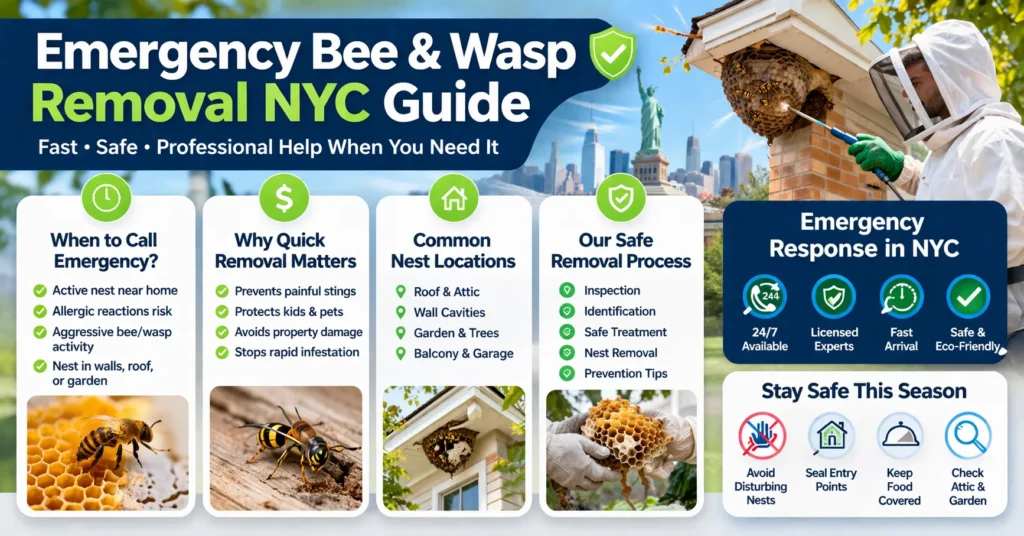
Finding a nest near your home or business can be stressful. Many property owners are unsure whether the nest belongs to bees, wasps, or hornets. Knowing How to Identify a Bee, Wasp, or Hornet Nest can help you understand the problem and choose the right solution.
Bee, wasp, and hornet nests may look alike from far away. However, their size, shape, location, and insect activity can help identify the type of nest. Some bees are helpful pollinators, but wasps and hornets can become aggressive when they feel their nest is threatened.
A nest near doors, windows, gardens, roofs, or commercial areas can create a safety risk. Early identification helps protect your family, employees, customers, and property. A professional bee exterminator can inspect the nest and provide safe solutions to remove unwanted insect activity.
At Best@Pest Exterminating, we help homeowners and businesses safely deal with bee, wasp, and hornet problems. Our trained team provides reliable pest control solutions throughout New York and nearby areas, helping protect both residential and commercial properties.
Why Identifying Bee, Wasp, and Hornet Nests Matters
Not every flying insect creates the same level of risk. Bees usually focus on collecting pollen and protecting their colony, while wasps and hornets can become defensive when their nests are disturbed.
Incorrectly identifying a nest may lead homeowners to use unsafe removal methods that can make insects more aggressive. Some nests can contain hundreds or even thousands of insects, making DIY removal dangerous.
Professional identification helps determine:
- The type of insect creating the nest
- The level of danger around the property
- The safest removal approach
- Whether preventive treatment is required
Early action is especially important for families with children, pets, elderly residents, or businesses that receive regular visitors.
How to Identify Different Types of Bee Nests
Bee nests can vary depending on the species. Many bees prefer protected locations where they can build colonies away from harsh weather conditions.
Common signs of a bee nest include:
- Bees entering small holes in walls, trees, or ground areas
- Increased bee activity around flowers and gardens
- A steady flight pattern near a specific location
- Visible honeycomb structures in some situations
Honey bees often create wax-based structures with organized honeycomb patterns. Other bee species may create underground nests or use existing spaces inside walls, roofs, and wooden structures.
Although bees are important for the environment, nests located near homes or businesses may require professional attention. A trained technician can determine whether relocation or removal is the best option.
How to Recognize a Wasp Nest Around Your Property
Wasps are commonly found around homes, outdoor spaces, restaurants, warehouses, and commercial buildings. Their nests are often easier to identify because they are usually made from a paper-like material created by chewing wood fibers.
A wasp nest may appear as:
- A round paper structure hanging from trees or ceilings
- A small enclosed nest under roof edges
- A larger colony inside wall openings
- A visible nest attached to outdoor structures
Many homeowners search for wasp nest removal when they discover these structures near their property. However, removing an active nest without proper equipment and knowledge can increase the chance of multiple stings.
Understanding how to get rid of wasps requires knowing the species, nest location, and activity level. Professional treatment is often the safest option when nests are close to living areas.
Signs That a Nest May Belong to Hornets
Hornets are a type of wasp that are generally larger and can become highly defensive when their nest is disturbed. Their nests are often built in elevated locations such as trees, roof areas, and tall structures.
Common hornet nest characteristics include:
- Large enclosed paper nests
- Heavy insect traffic around one location
- Defensive behavior near the nest
- Nest openings that allow insects to enter and exit
Different hornet and wasp species may build different styles of nests depending on their environment. Some species create exposed nests, while others prefer hidden spaces.
Understanding Nest Locations Helps With Identification
The location of a nest provides important clues about the insect type.
Common nest locations include:
- Trees and shrubs
- Roof corners and attic spaces
- Wall gaps and cracks
- Garages and sheds
- Underground areas
- Outdoor equipment and storage areas
Wasps and hornets often choose protected areas where their colony can grow without disturbance.
How Bee, Wasp, and Hornet Nests Differ
Knowing the differences between nests can help homeowners identify the problem quickly.
Bee Nests
Bee nests usually contain wax structures and are often associated with honeycomb patterns. Bees typically avoid unnecessary attacks unless their colony is threatened.
Wasp Nests
Wasp nests are commonly made from paper-like material. They may appear gray, brown, or light tan and can be found hanging from structures or hidden inside openings.
Hornet Nests
Hornet nests are usually larger and more enclosed. Hornets may aggressively defend their colony, especially during late summer when colonies reach their peak size.
For homeowners who are unsure about identification, professional advice is recommended before attempting any treatment.
Common Places Where Bees, Wasps, and Hornets Build Nests
Different insects choose different nesting locations based on protection, food sources, and weather conditions.
Property owners should regularly check:
- Roof lines and gutters
- Outdoor furniture
- Garden areas
- Tree branches
- Attics
- Wall spaces
- Storage buildings
- Commercial property entrances
Businesses such as restaurants, hotels, schools, and warehouses should pay special attention because insect nests can affect customers, employees, and daily operations.
Why Professional Nest Removal Is Safer Than DIY Methods
Many online solutions suggest sprays or homemade methods, but these approaches may not solve the entire problem. Removing only the visible nest does not always eliminate the colony.
Professional technicians understand:
- Insect behavior
- Nest construction
- Safe treatment methods
- Protective equipment requirements
- Long-term prevention strategies
A professional bee removal company can inspect the property, identify the insect species, and recommend the most suitable solution.
Best@Pest Exterminating offers reliable pest solutions designed for both residential and commercial customers who need safe and effective insect control.
Professional Solutions for Bee, Wasp, and Hornet Problems
When insects create a threat around your home or business, professional help can provide peace of mind. Experienced technicians can locate hidden nests, treat active colonies, and reduce the chances of future infestations.
If you need bee removal services, working with trained professionals ensures the problem is handled carefully while protecting your family, employees, customers, and property.
Residents looking for wasp pest control solutions can benefit from a detailed inspection and customized treatment plan based on their specific situation.
Best@Pest Exterminating serves customers looking for reliable pest management solutions in areas including:
- Pest Control Bronx
- Pest Control Brooklyn
- Pest Control Long Island
- Pest Control Manhattan
- Pest Control New Jersey
- Pest Control Queens
Local Bee, Wasp, and Hornet Problems in New York
New York properties often experience seasonal insect activity due to gardens, trees, outdoor areas, and changing weather conditions.
Homeowners frequently search for wasps in New York when they notice increased insect activity around their property during warmer months.
Understanding the different wasps of New York helps property owners recognize common nesting patterns and take action before colonies become larger.
For complete protection, homeowners can combine professional removal with preventative pest control services to reduce future risks.
For broader protection against insects and other pests, many property owners rely on professional Pest Control NYC solutions from experienced technicians.
How to Safely Handle a Nest Before Professional Help Arrives
If you discover a nest near your property, avoid disturbing it. Taking unnecessary risks can cause defensive behavior from the colony.
Recommended steps include:
- Keep children and pets away from the area
- Avoid touching or shaking the nest
- Do not block the entrance of an active nest
- Avoid standing directly underneath hanging nests
- Contact a professional pest control provider
Homeowners looking for guidance can also learn more about How to Safely Remove Wasps, Bees, and Hornet Nests in Queens before deciding on the next step.
Professional Wasp and Hornet Removal Options
Removing a nest requires knowledge of insect behavior and proper safety procedures. Professional technicians use specialized methods to handle active colonies effectively.
If you need help with an active nest, experienced specialists providing Wasp Removal Services can inspect your property and recommend the safest treatment.
Many homeowners also look for a qualified Wasp Exterminator in NYC when nests appear near homes, offices, or commercial buildings.
Understanding What’s the Difference Between Wasps and Hornets can also help you identify the insect before contacting a professional.
For homeowners dealing with a visible nest, professional guidance on How to Remove Wasp Nest Safely can prevent unnecessary risks.
Residents who need targeted solutions can also explore professional Bee Control in NYC for bee-related concerns.
Why Choose Best@Pest Exterminating for Bee and Wasp Problems?
Best@Pest Exterminating understands that every property has different pest challenges. Whether you are dealing with a small nest near your home or a larger infestation affecting a commercial property, professional support can make the process safer.
Our experienced team helps identify insect species, locate nests, and provide effective treatment options designed for your situation.
From residential properties to businesses, customers looking for solutions such as How to Remove Bees, Wasps & Hornets From Your Brooklyn Property can receive professional assistance from trained specialists.
Frequently Asked Questions About Bee, Wasp, and Hornet Nests
1. How can I tell if a nest belongs to bees or wasps?
Bee nests usually contain wax structures and honeycomb patterns, while wasp nests are often made from paper-like material. Professional inspection can confirm the exact species.
2. Are bee and wasp nests dangerous near homes?
Yes. Even normally calm insects can become defensive when their nest is close to people, pets, or high-traffic areas.
3. Can I remove a wasp nest myself?
DIY removal can be risky, especially when nests contain large colonies. Professional removal is usually the safest option.
4. What attracts bees, wasps, and hornets to my property?
Food sources, water, shelter, gardens, and small openings in buildings can attract these insects.
5. When is the best time to remove a nest?
Professional removal can be performed whenever an active nest creates a safety concern. Early action usually prevents larger colonies.
6. How do professionals identify the type of nest?
Technicians examine the nest shape, location, insect appearance, activity patterns, and nesting materials to determine the species.
Conclusion
Knowing How to Identify a Bee, Wasp, or Hornet Nest allows homeowners and business owners to respond quickly and safely. While some insects play an important role in nature, nests near living spaces can create safety concerns.
Professional inspection and removal services provide a safer solution than attempting risky DIY methods. Best@Pest Exterminating helps residential and commercial customers manage bee, wasp, and hornet problems with effective pest control solutions throughout New York and nearby areas.